TL;DR:
- Authentic wedding photography captures genuine emotions and natural moments, not just posed images.
- Subtle, consistent editing and natural lighting are key markers of authentic wedding imagery.
- A blend of documentary and light editorial styles offers relaxed, real, and beautiful wedding photos.
Many couples only realise once the photos arrive that something feels slightly off. The images are polished, the lighting is lovely, and everyone is smiling in exactly the right direction. Yet somehow, they don’t quite capture the day you actually lived. That gap between what looks impressive and what feels real is at the heart of authentic wedding photography. This guide will help you understand what authenticity truly means in wedding imagery, how to spot it in a photographer’s portfolio, and why choosing it will matter far more to you in ten years than any perfectly composed, magazine-style portrait ever could.
Table of Contents
- What authenticity means in wedding imagery
- Key markers of authentic wedding imagery
- Comparing styles: Documentary, editorial, and hybrid approaches
- How editing influences authenticity
- Why perfect is not always authentic: Our perspective
- Creating your own authentic memories
- Frequently asked questions
Key Takeaways
| Point | Details |
|---|---|
| Real emotion matters | Authentic wedding images focus on capturing true feelings instead of staged moments. |
| Natural light is key | Photographers who master daylight and avoid heavy artificial lighting can create a genuine atmosphere. |
| Editing shapes authenticity | Subtle, consistent edits help keep photos feeling timeless and real. |
| Find your perfect style | Know the difference between documentary, editorial, and hybrid styles to select what best suits you. |
| Comfort leads to real memories | Prioritising comfort with your photographer ensures authentic smiles and moments on your wedding day. |
What authenticity means in wedding imagery
Authenticity in wedding photography is not simply about avoiding posed shots. It runs much deeper than that. At its core, authentic wedding photography is about capturing the real emotional texture of your day. The nervous laugh before you walk down the aisle. The quiet moment your partner’s eyes fill with tears. The way your grandmother squeezes your hand during the ceremony. These are the moments that define your wedding, and they cannot be recreated once they pass.
A common misconception is that candid photography means unflattering photography. Many couples worry that unposed images will catch them mid-blink or mid-chew. In reality, a skilled photographer who prioritises authenticity is always watching for genuine moments, not random ones. They understand the difference between a fleeting, beautiful glance and an awkward pause. Their job is to be present, patient, and perceptive.
Another misconception is that artistic editing automatically signals authenticity. Heavy filters, dramatic colour grading, or moody presets can look striking on Instagram, but they often mask the real atmosphere of your day. As fine art photography guidance notes, authenticity endures trends, with film or natural editing preferred over heavy manipulation for timeless emotional resonance. A photo that feels genuinely yours twenty years from now will be one that reflects real light, real colour, and real feeling.
Here is what authentic wedding imagery genuinely focuses on:
- Real emotions over performed expressions
- Natural light that reflects the actual atmosphere of the space
- Unforced moments between you, your partner, and your loved ones
- Subtle, consistent editing that preserves skin tones and true colour
- A narrative feel where images tell the story of your whole day
“The most treasured wedding photos are rarely the ones where everyone looked perfect. They are the ones where everyone looked present.”
Authenticity is not about imperfection for its own sake. It is about truth. And truth, captured well, is always beautiful.
Key markers of authentic wedding imagery
Once you understand what authenticity means, you can start recognising it in real photo galleries. This is where the practical work begins, and it is genuinely exciting once you know what to look for.
The most obvious marker is the presence of spontaneous, unposed moments throughout the gallery. Not just one or two candid shots tucked between formal portraits, but a genuine thread of real emotion running through the entire album. Look for tears, laughter, glances between guests, children running about, and quiet moments between the couple. These signal that the photographer was truly present and paying attention.
Natural light mastery is essential for an authentic feel, as artificial lighting can create unnatural looks that immediately date a photograph. When you browse a gallery, notice whether the light feels warm and real or harsh and studio-like. Window light, golden-hour sunlight, and soft overcast skies all produce that beautiful, genuine glow that makes images feel alive.
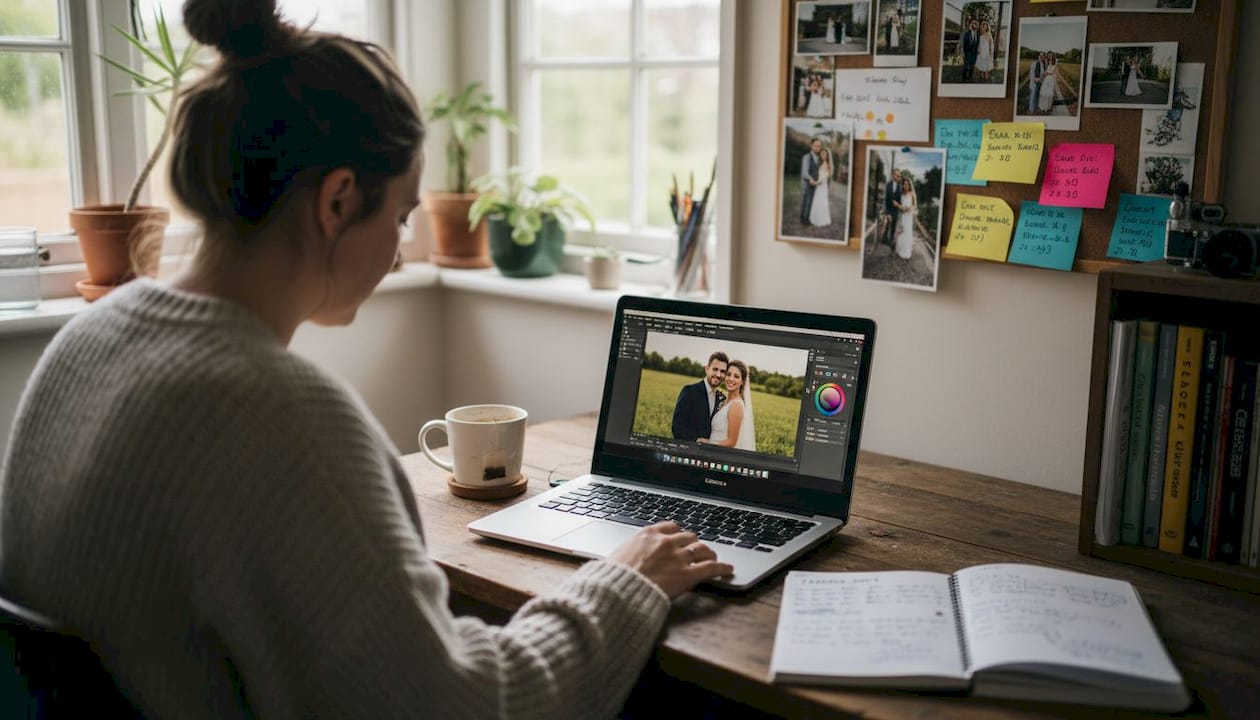
Editing is another telling sign. Authentic photographers use subtle, consistent editing that enhances rather than transforms. You should be able to recognise the real venue, the real colours of the flowers, and the real skin tones of the people you love. If a gallery looks as though it could have been taken anywhere, at any time, in any colour palette, that is a sign that heavy editing has replaced genuine atmosphere.
Consistency throughout the full album matters enormously. Many photographers show only their finest highlight images on their website. These can be misleading. To understand how to choose wedding photo styles that truly suit you, explore what editorial wedding photography involves compared to a more documentary approach.
Key markers to look for in any gallery:
- Candid moments that feel unaware and unguarded
- Natural, flattering light throughout the day
- Editing that feels consistent and understated
- A clear emotional journey from morning preparations to the final dance
- Images that make you feel something, not just admire the composition
Pro Tip: Always ask photographers for a full gallery from a single wedding, not just their curated highlights. A full gallery reveals how they handle quieter moments, tricky lighting, and the natural ebb and flow of a real wedding day.
Comparing styles: Documentary, editorial, and hybrid approaches
Having recognised authenticity in photos, it helps to compare the main photography styles so you can choose what truly suits your vision and your personalities.
Documentary wedding photography is the purest expression of authenticity. The photographer observes and captures without directing. There are no posed portraits, no staged moments, and minimal interference in how the day unfolds. The result is a raw, real record of everything that happened. For couples who want to feel completely relaxed and unselfconscious, this approach is deeply appealing.
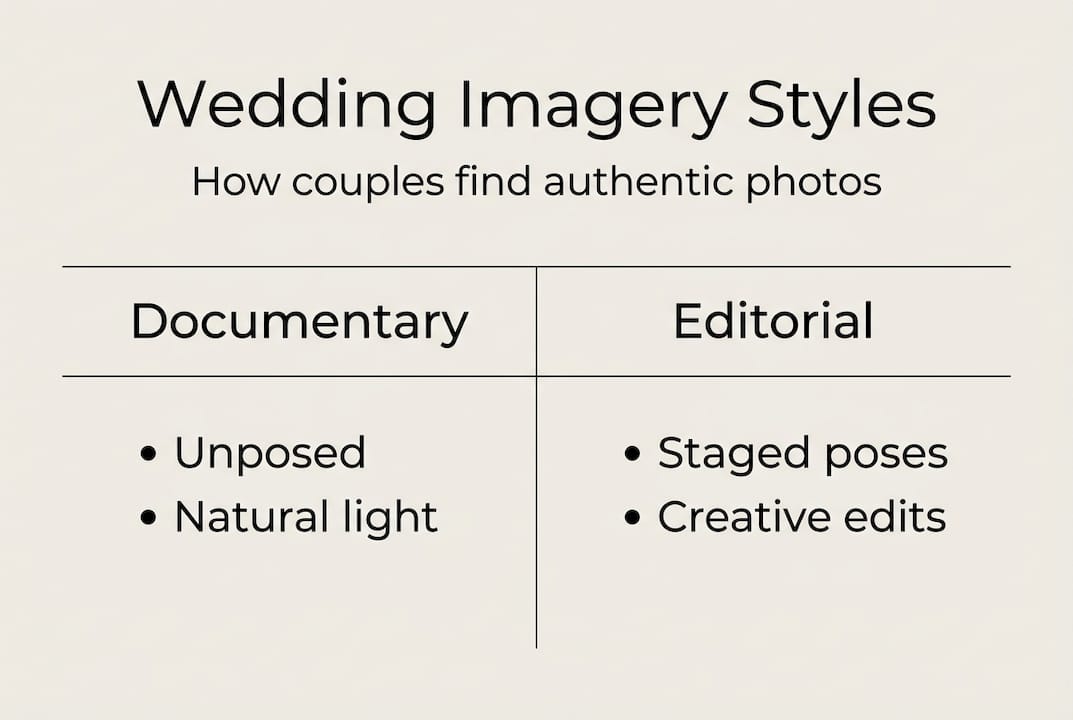
Editorial photography sits at the opposite end. As Vogue notes, fine art and editorial styles emphasise posed compositions and post-processing, contrasting with pure documentary’s raw authenticity. Editorial images can be stunning, but they require more direction and tend to reflect a photographer’s artistic vision as much as your own story.
The hybrid approach is where many couples find their ideal balance. Many experts recommend blending documentary candids with light editorial portraits for comprehensive coverage without sacrificing authenticity. This means you get the relaxed, unguarded moments and a handful of beautifully composed portraits that you will be proud to frame. We find this approach works wonderfully for most Yorkshire couples.
| Style | Posing level | Editing style | Best for |
|---|---|---|---|
| Documentary | None | Minimal, natural | Couples who want total relaxation |
| Editorial | High | Polished, artistic | Couples who love styled imagery |
| Hybrid | Light | Subtle and consistent | Couples wanting both warmth and beauty |
You might also want to explore documentary wedding videography and our candid photography process to see how these principles translate into moving image as well.
How editing influences authenticity
Editing is one of the most misunderstood aspects of wedding photography. Many couples assume that more editing means better photos. In reality, the opposite is often true when it comes to authenticity.
Subtle, consistent editing preserves the real atmosphere of your day. It keeps skin tones natural, maintains the true colour of your flowers and décor, and ensures that the light in each image reflects what was actually there. When you look back at these photos in twenty years, they will still feel like your wedding, in your venue, on your day.
Over-editing tells a different story. Heavy filters, artificial blurring, and dramatic colour shifts can create a look that feels cinematic and exciting right now, but dates surprisingly quickly. What feels trendy in 2026 can feel dated within a decade. As fine art photography markers confirm, film or natural editing is preferred over heavy manipulation for timeless emotional resonance.
Here is a quick comparison of editing approaches and their impact:
| Editing approach | Effect on authenticity | Longevity |
|---|---|---|
| Natural, film-inspired | Preserves real atmosphere | Very high |
| Subtle colour grading | Enhances without distorting | High |
| Heavy filters or presets | Masks real light and colour | Low |
| Dramatic colour shifts | Creates cinematic but artificial feel | Low |
Understanding how editing shapes your wedding story is genuinely valuable when you are comparing photographers.
Pro Tip: Ask any photographer you are considering to share a before-and-after example of their editing. This reveals their real approach far more honestly than finished gallery images alone. Also, have an open conversation about your taste. Do you want emotional realism, or do you prefer a slightly more cinematic feel? A good photographer will listen and adapt.
Why perfect is not always authentic: Our perspective
We have photographed many weddings across Yorkshire and beyond, and we have noticed something consistently true. The images that couples contact us about years later, the ones they say they cherish most, are almost never the perfectly posed portraits. They are the ones where something unexpected happened. A flower girl who fell asleep on a chair. A best man who could not hold back his tears. A couple sharing a private joke during the signing of the register.
There is a real trap in chasing perfection. When couples prioritise flawless composition above all else, they can inadvertently create a record of an idea of their wedding rather than the wedding itself. The most meaningful candid wedding moments are often slightly messy, wonderfully human, and completely irreplaceable.
Our honest advice is this: choose photographers you feel genuinely comfortable with over photographers whose portfolio is technically impressive but whose presence makes you feel self-conscious. Comfort produces authenticity. Authenticity produces the images you will truly treasure.
Creating your own authentic memories
Reflecting on what authenticity really means for your wedding is the first step. The next is finding a photographer who shares that passion and understands how to bring it to life on your actual day.
At Plomien Wedding Photography, we believe that every Yorkshire couple deserves images that feel genuinely theirs. We specialise in capturing the warmth, laughter, and quiet emotion that make your wedding unique. Explore why wedding photojournalism matters and discover our candid photography process to understand how we work. When you are ready to take the next step, browse our wedding photography packages and let us help you preserve every heartfelt moment of your celebration.
Frequently asked questions
How do I know if a wedding photographer creates authentic imagery?
Look for candid moments, natural light mastery, and subtle editing in their full galleries, not just selected highlights. A photographer who shares complete albums from real weddings is demonstrating genuine confidence in their authentic approach.
What editing choices should I avoid for an authentic look?
Avoid heavy filters, obvious airbrushing, or trendy colour casts, as natural editing produces timeless, real-feeling photos. The goal is editing that enhances the real atmosphere of your day rather than replacing it with something artificial.
Can I combine documentary and editorial photography styles?
Yes, blending candids with portraits provides both authenticity and keepsake images. A hybrid approach gives you the relaxed, unguarded moments alongside a few beautifully composed frames you will be proud to display.
Does posing ruin authenticity in wedding photos?
Not necessarily, as natural and comfortable poses can complement genuine candid moments in your final album. As editorial styles show, the key is keeping direction light and ensuring the couple feels at ease rather than performing for the camera.
Recommended
- Authentic Wedding Photography: Capturing Real Emotions – Plomien Wedding Photography
- Why Invest in Wedding Photography: Lasting Impact – Plomien Wedding Photography
- Top benefits of candid wedding photos for real memories
- Master the Candid Wedding Photography Process for Stunning Memories – Plomien Wedding Photography