Planning a wedding in Yorkshire often means dreaming of every moment being captured just as you remember it. When photography and videography are carefully coordinated, your day unfolds gracefully in both stills and motion. Couples who thoughtfully define their vision and communicate schedule needs early find their wedding story is told with heart and style. Discover how clear communication and creative planning help you preserve every highlight and cherished detail of your special celebration.
Table of Contents
- Step 1: Define Your Wedding Vision And Coverage Requirements
- Step 2: Align Videography And Photography Schedules Effectively
- Step 3: Coordinate Key Moments With Your Vendors And Guests
- Step 4: Review Shot Lists And Confirm Personal Preferences
- Step 5: Verify Final Edits And Ensure Seamless Delivery
Quick Summary
| Key Point | Explanation |
|---|---|
| 1. Define your videography vision | Discuss your preferred style and key moments with your partner to ensure an authentic representation of your love story. |
| 2. Coordinate schedules with vendors | Hold a joint meeting with photography and videography teams to align their schedules and avoid conflicts during key moments. |
| 3. Create a detailed timeline | Develop a comprehensive timeline outlining key events, vendor roles, and guest responsibilities for seamless coordination on the wedding day. |
| 4. Review shot lists thoroughly | Collaborate with your videography team to create a shot list that captures essential moments, ensuring all details of your story are included. |
| 5. Confirm final edits and delivery | Conduct a thorough review of the edited video, focusing on narrative flow and emotional impact, before confirming delivery method and formats. |
Step 1: Define your wedding vision and coverage requirements
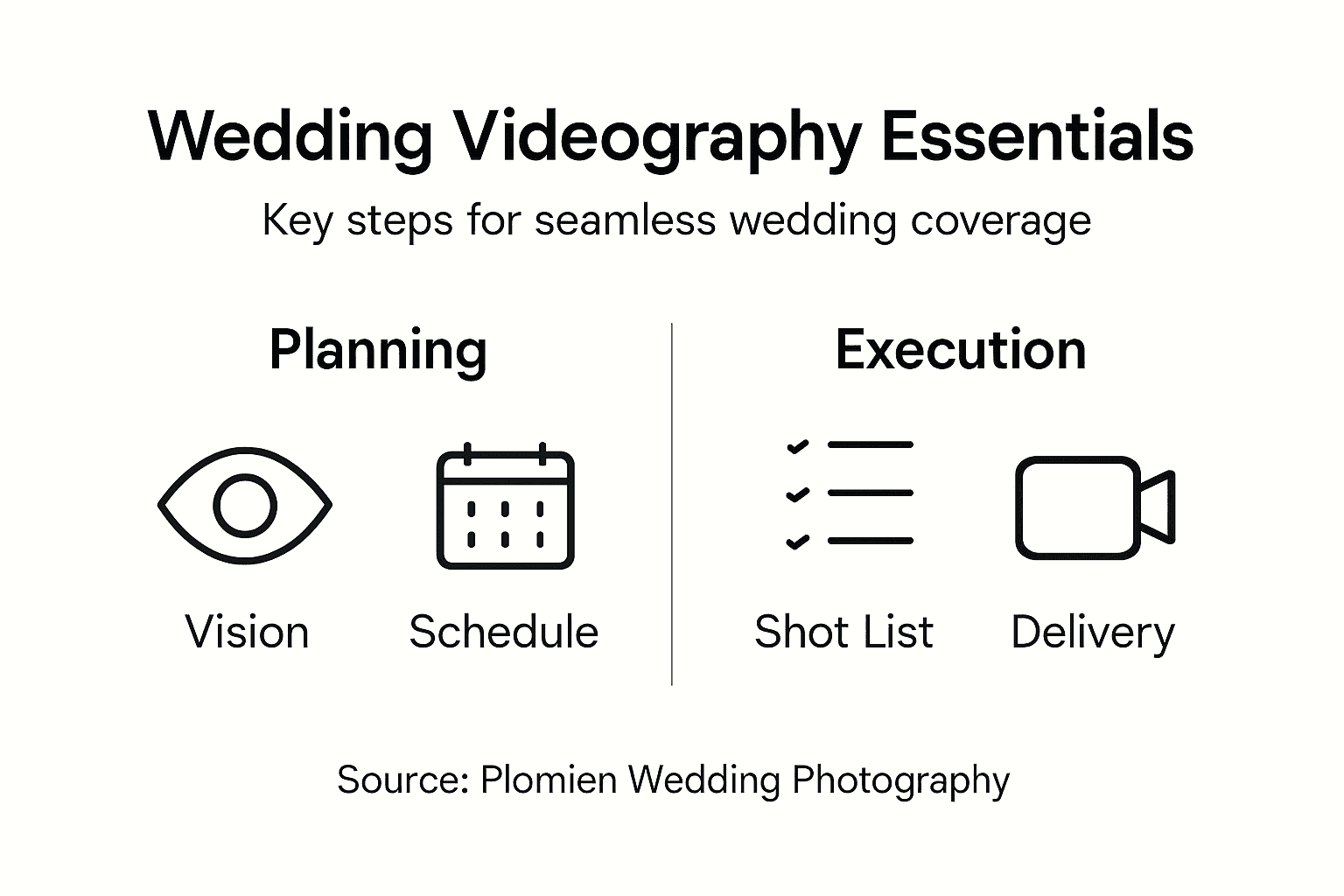
Defining your wedding videography vision is the essential first step towards creating a lasting visual narrative of your special day. Your wedding film should authentically represent your unique love story, capturing moments that reflect your personality and relationship dynamic.
Start by discussing your preferred videography style with your partner. Some couples prefer a documentary storytelling approach that captures events candidly, while others desire a more cinematic experience with artistic shots and emotional highlights. Consider the key moments you want preserved: personal vows, cultural traditions, family interactions, and reception celebrations. Communication with your videographer about these preferences ensures they understand exactly how to document your wedding day.
Here’s a summary of popular wedding videography styles and their key characteristics:
| Style | Visual Approach | Typical Editing |
|---|---|---|
| Documentary | Unscripted, candid moments | Linear, minimal effects |
| Cinematic | Artistic shots, dramatic feel | Music, creative cuts |
| Traditional | Formal and chronological | Simple transitions |
| Story-driven | Personal narratives focused | Interview clips, voiceovers |
Most professional wedding videography packages include several hours of filming, a highlight reel, full ceremony footage, and key reception moments. By clearly articulating your expectations early, you can select a package that perfectly aligns with your vision and budget.
Insider Tip: Schedule an initial consultation with potential videographers where you can share your love story and vision in person, allowing them to understand the emotional landscape of your wedding day.
Step 2: Align videography and photography schedules effectively
Coordinating your wedding day photography and videography schedules requires strategic planning and clear communication to ensure every precious moment is beautifully captured. Synchronising these two creative teams is crucial for producing a seamless visual record of your wedding day.
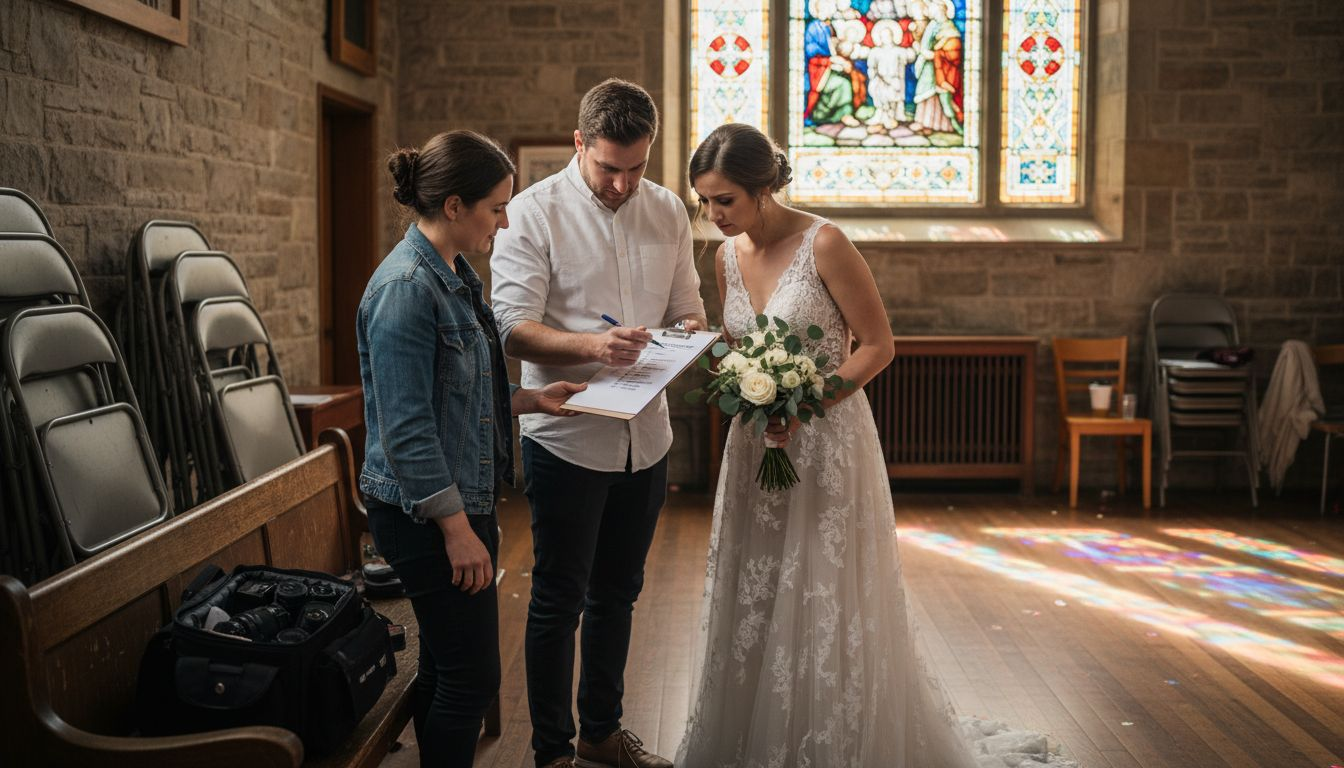
Start by scheduling an initial joint meeting with your wedding coverage professionals to discuss timeline logistics. This collaborative session allows photographers and videographers to align their approaches, identify key moments, and develop a comprehensive shooting strategy. Discuss specific requirements such as group photo arrangements, ceremony positioning, and reception coverage to minimise potential conflicts and ensure smooth collaboration.
When creating your wedding day timeline, allocate sufficient buffer time between different segments to accommodate both photography and videography teams. Include dedicated windows for couple portraits, group shots, and candid moments that allow both teams to capture images and footage without feeling rushed or constrained. Clear communication about expectations, preferred shooting styles, and specific shot lists will help both professionals work harmoniously and capture your day from multiple perspectives.
Insider Tip: Request that your photography and videography teams exchange contact details and review the wedding day timeline together in advance to prevent potential scheduling conflicts and ensure a coordinated approach.
Step 3: Coordinate key moments with your vendors and guests
Coordinating the intricate dance of wedding day moments requires meticulous planning and clear communication with all participants. Your goal is to create a seamless experience that allows every vendor and guest to understand their role and timing throughout the celebration.
Begin by developing comprehensive event coordination strategies that map out precise timings for each significant moment. This master timeline should detail vendor arrival times, key event sequences, and transition periods. Discuss the schedule thoroughly with each vendor during pre-wedding meetings, ensuring photographers, videographers, musicians, caterers, and coordinators are aligned on the day’s flow. Pay special attention to critical moments like ceremony processional, first dance, speeches, and reception transitions to prevent potential scheduling conflicts.
Communicate the wedding day timeline to key guests in advance, particularly those involved in special moments such as parents, wedding party members, and those participating in cultural or symbolic traditions. Consider creating a simplified version of the timeline for guests and a more detailed version for vendors. Provide clear instructions about photography locations, group photo arrangements, and any specific guest responsibilities to ensure everyone feels informed and prepared.
Use this timeline overview to help coordinate vendor activities effectively:
| Wedding Segment | Key Vendor Involvement | Recommended Timing Management |
|---|---|---|
| Pre-ceremony prep | Photographers, stylists | Staggered arrivals, buffer time |
| Ceremony | Officiant, videographer | Rehearsal for timing consistency |
| Reception transitions | Caterers, entertainers | Coordinated cue sheets |
| Group photos | Photo & video teams | Pre-arranged lists, clear instructions |
Insider Tip: Create a group messaging chat or shared digital document with key vendors and wedding party members to enable real-time communication and quick problem solving on your wedding day.
Step 4: Review shot lists and confirm personal preferences
Crafting the perfect wedding video requires collaborative planning and detailed communication about your visual storytelling expectations. Your videography team needs a comprehensive understanding of the moments most meaningful to you and your partner.
Start by developing systematic wedding videography shot lists that comprehensively cover every significant moment of your celebration. Break down your shot list by wedding segments including pre ceremony preparations, ceremony highlights, reception events, and intimate couple moments. Include must capture shots like personal vows, first kiss, family reactions, dance performances, and any unique cultural traditions specific to your wedding. Create a visual mood board that illustrates your preferred aesthetic style helping your videography team understand your emotional and artistic vision.
Review the proposed shot list meticulously with your videography team, discussing specific angles, emotional moments, and creative approaches you desire. Consider including personalised details such as candid guest interactions, special family moments, and unexpected spontaneous reactions that capture the genuine essence of your wedding day. Be explicit about any moments you want emphasised or any specific family dynamics your videographer should be sensitive towards.
Insider Tip: Provide your videography team with a brief family dynamic overview and a list of key relationships to help them anticipate and capture meaningful interactions during your wedding celebration.
Step 5: Verify final edits and ensure seamless delivery
The final stage of your wedding videography journey involves carefully reviewing and approving the edited footage that will become your treasured memory of the day. This process requires attention to detail and clear communication with your videography team.
Implement comprehensive video content delivery practices to ensure you receive a polished final product. Schedule a comprehensive review session with your videographer where you can examine the entire edit, checking for narrative flow, emotional resonance, and technical quality. Pay close attention to audio clarity, colour grading, transition smoothness, and how effectively the video captures the genuine moments and atmosphere of your wedding day. Request multiple file versions in different formats to ensure compatibility across various devices and potential future playback requirements.
During the final review, focus on the storytelling aspect of your wedding film. Ensure the edit captures the unique emotional journey of your day, highlighting key moments while maintaining a natural and authentic feel. Discuss any minor adjustments or refinements you might want, but be mindful of maintaining the professional creative vision of your videography team. Confirm the delivery method, storage options, and any potential future access to your wedding video files.
Insider Tip: Create a dedicated digital folder or cloud storage location where you can securely store multiple backup copies of your wedding video in different formats.
Achieve Perfect Wedding Videography Coordination with Expert Support
Planning a seamless wedding videography experience requires clear schedules, well-defined shot lists, and flawless vendor communication. This guide highlights challenges such as aligning photographers and videographers, managing key moments, and ensuring the final edit captures your unique story. Avoid last-minute stress by focusing on strategic timeline coordination, sharing your vision openly, and confirming personal preferences well before your special day.
By partnering with seasoned professionals like those at Plomien Wedding Photography, you gain access to tailored full-day coverage that honours every heartfelt moment of your wedding. Our team specialises in authentic, candid storytelling with collaborative planning to synchronise photo and video efforts smoothly. Discover how our dedication to detail and seamless coordination can transform your wedding memories into timeless films.
Explore insightful tips and client experiences in our Uncategorized category and take the next step towards capturing your wedding perfectly.
Experience stress-free videography coordination backed by expert care.
Ready to craft your flawless wedding story through expert videography and photography? Visit Plomien Wedding Photography today to view our customised packages and start your journey to beautiful, lasting memories.
Frequently Asked Questions
What should I consider when defining my wedding videography vision?
Your wedding videography vision should authentically reflect your love story. Discuss your preferred style with your partner, such as documentary, cinematic, or traditional, and communicate specific moments you want captured, like personal vows and cultural traditions.
How can I effectively align the schedules of my videography and photography teams?
To align the schedules, arrange a joint meeting with both teams to discuss the timeline and shooting strategy. Ensure you account for sufficient buffer time between segments, allowing both teams to capture essential moments without feeling rushed.
How do I coordinate important moments with my wedding vendors and guests?
Develop a comprehensive timeline detailing vendor arrival times and key event sequences. Distribute this timeline to all vendors and key guests involved in significant moments to ensure everyone understands their roles and responsibilities, facilitating a smooth event flow.
What should I include in a shot list for my wedding videography?
Create a detailed shot list that outlines critical moments you want captured during your wedding, such as the ceremony highlights and reception events. Include specific angles and emotional moments that hold significance to you and your partner to help guide your videography team.
How do I review and confirm the final edits of my wedding video?
Schedule a review session with your videographer to check the entire edit, focusing on narrative flow and emotional resonance. Discuss any adjustments you would like, but keep in mind the overall creative vision of your videography team to ensure a polished final product.
What are the best practices for storing my wedding video?
Create a dedicated digital folder or utilise cloud storage for secure backup copies of your wedding video. Ensure you save multiple versions in different formats to accommodate various devices and future playback needs.