Choosing the perfect photographer for your Yorkshire or international destination wedding comes with its own unique challenges and excitement. From adapting to different venue lighting to honouring local traditions, every detail matters when capturing the magic of your celebration. This guide reveals how careful venue assessment, an organised shot list, and weather-sealed professional equipment can turn fleeting moments into timeless images you will cherish forever.
Table of Contents
- Step 1: Assess Venue and Lighting Requirements
- Step 2: Plan Shot List and Capture Key Moments
- Step 3: Pack and Prepare Essential Equipment
- Step 4: Adapt to Local Culture and Conditions
- Step 5: Edit and Deliver Outstanding Images
Quick Summary
| Essential Insight | Detailed Explanation |
|---|---|
| 1. Assess Lighting Variability | Explore the venue at different times to understand light patterns and prepare for varying conditions during the wedding day. |
| 2. Create a Dynamic Shot List | Develop a shot list that balances planned images with opportunities for spontaneous moments, discussing cultural traditions with the couple. |
| 3. Prepare Redundant Equipment | Pack multiple camera bodies and backup gear to ensure reliability amid travel challenges and unplanned equipment failures. |
| 4. Research Local Customs | Familiarise yourself with the local culture and wedding traditions to avoid sensitive situations and capture authentic moments. |
| 5. Communicate Editing Timelines | Clearly inform clients about the expected delivery dates for edited images to enhance overall satisfaction and trust. |
Step 1: Assess Venue and Lighting Requirements
When planning destination wedding photography, your initial task involves understanding the unique visual landscape of your selected venue. Location scouting and venue assessment are critical steps that prepare you to capture breathtaking wedding memories.
Start by thoroughly investigating the venue’s physical characteristics and lighting conditions. This means exploring both indoor and outdoor photography spaces, understanding potential challenges, and identifying optimal shooting locations. Consider the following assessment strategies:
- Walk the entire venue perimeter during different times of day
- Analyse natural light patterns and potential shadow areas
- Identify architectural features that might enhance or obstruct photography
- Check available power sources for additional lighting equipment
- Note potential backdrops for couple and group portraits
Professional photographers always scout locations in advance to anticipate lighting challenges and creative opportunities.
Additionally, research local customs and secure necessary photography permits well ahead of the wedding day. Some destinations have specific regulations about professional photography in historic or public spaces. Communicate with venue managers to understand their specific guidelines and restrictions.
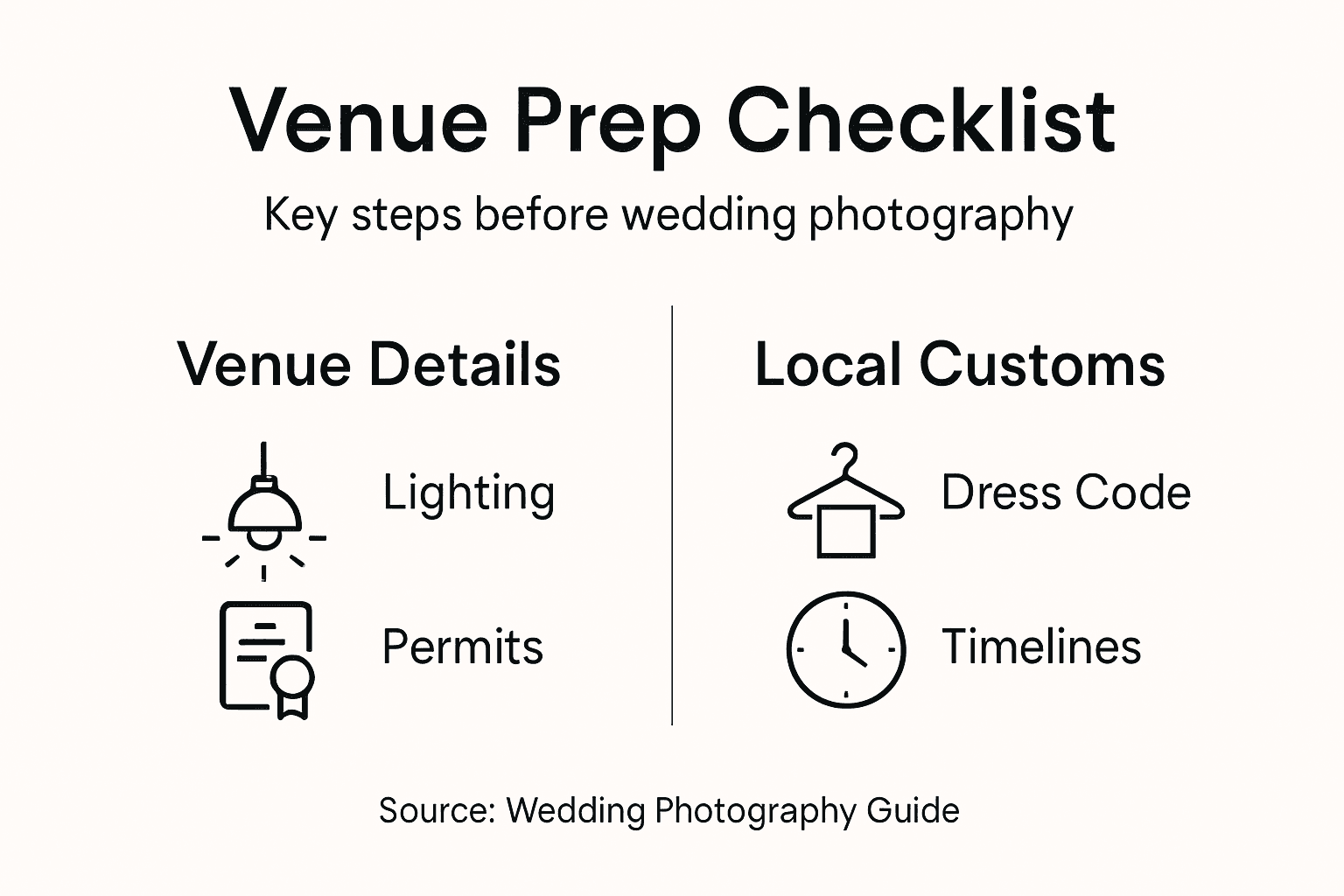
Top tip: Bring a light metre and test shots during your venue reconnaissance to understand precise lighting conditions and prepare your camera settings in advance.
Step 2: Plan Shot List and Capture Key Moments
Crafting a comprehensive shot list is essential for documenting the intricate details and emotional journey of a destination wedding. Creating a comprehensive shot list enables photographers to capture every significant moment while maintaining creative flexibility.
Your shot list should be a dynamic roadmap that balances structured planning with spontaneous creativity. Begin by discussing specific expectations with the couple, understanding their cultural traditions, and identifying the most meaningful moments they want preserved. Consider developing a list that captures:
- Ceremonial rituals unique to their cultural background
- Candid interactions between family and friends
- Emotional exchanges during key wedding moments
- Venue-specific architectural or landscape highlights
- Unexpected, tender moments between the couple
Destination wedding photography requires a delicate balance between planned compositions and authentic, unscripted storytelling.
Work closely with wedding planners and local coordinators to understand the day’s precise timeline and potential logistical challenges. This collaboration helps you anticipate lighting changes, identify optimal shooting locations, and ensure you’re prepared for every significant moment.
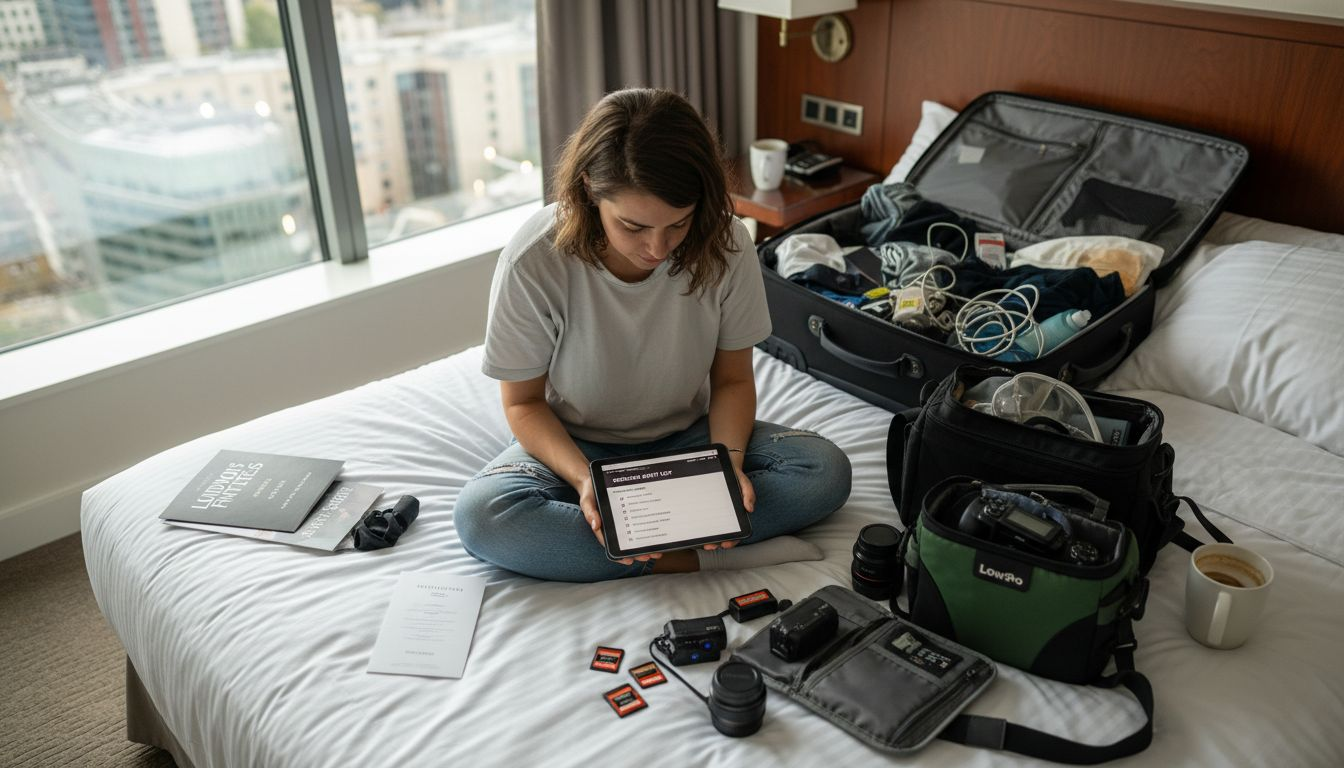
Top tip: Create a digital shot list on your smartphone that can be easily modified and referenced throughout the wedding day, allowing for real-time adjustments and comprehensive coverage.
Step 3: Pack and Prepare Essential Equipment
Successful destination wedding photography hinges on meticulous equipment preparation and strategic packing. Essential equipment preparation requires careful consideration of gear that can withstand diverse travel challenges and capture every precious moment.
Your photography kit should include multiple redundant systems to prevent potential equipment failures. Pack multiple camera bodies, lenses covering different focal lengths, and weather-sealed professional equipment. Consider assembling a comprehensive kit that includes:
- At least two professional camera bodies
- Versatile zoom and prime lenses
- Portable lighting systems
- Multiple battery packs and chargers
- Waterproof and shock-resistant camera bags
- International power adapters
- Backup memory cards with sufficient storage
Professional destination wedding photographers always prioritise equipment redundancy and adaptability.
Pay close attention to airline regulations regarding photography equipment transportation. Some destinations have specific restrictions on professional gear, so research local requirements and consider purchasing additional travel insurance for your valuable equipment.
Top tip: Create a detailed digital inventory of your equipment with serial numbers and photographs, which can be crucial for insurance claims and international customs declarations.
Step 4: Adapt to Local Culture and Conditions
Destination wedding photography demands more than technical skill – it requires deep cultural sensitivity and adaptability. Understanding local cultural nuances is crucial for capturing authentic and respectful wedding imagery that truly reflects the couple’s heritage.
Before travelling, invest significant time in researching regional customs and wedding traditions. This preparation helps you navigate potential sensitivities and anticipate unique photographic opportunities. Consider the following cultural adaptation strategies:
- Learn basic local language greetings
- Study traditional wedding ceremony protocols
- Understand appropriate dress codes and behavioural expectations
- Research religious or cultural photography restrictions
- Identify key ceremonial moments with special significance
- Connect with local wedding vendors for insider insights
Cultural intelligence transforms destination wedding photography from mere documentation to meaningful storytelling.
Remain flexible with your approach, recognising that each destination presents unique challenges. Weather conditions, lighting variations, and local expectations will require you to adjust your standard photography techniques and equipment usage.
Top tip: Pack culturally neutral, respectful attire that allows you to blend seamlessly into different wedding environments while maintaining professional photographic mobility.
Step 5: Edit and Deliver Outstanding Images
Transforming raw destination wedding photographs into stunning visual narratives requires strategic post-production techniques. Efficient editing workflows are crucial for maintaining high-quality image delivery and client satisfaction.
Your editing process should focus on preserving the destination’s unique atmosphere while maintaining consistent photographic style. Begin by carefully culling and selecting the most compelling images that tell the wedding’s authentic story. Key editing considerations include:
- Colour correction to reflect true environmental tones
- Exposure adjustments for varying international lighting conditions
- Subtle retouching that maintains natural aesthetics
- Colour grading to enhance emotional resonance
- Cropping and composition refinement
- Maintaining a cohesive visual narrative
Professional destination wedding editing transforms raw captures into meaningful, emotionally rich storytelling.
Communicate clearly with your clients about delivery timelines and image formats. Consider providing digital galleries, high-resolution downloads, and custom-designed wedding albums that showcase the destination’s unique character and the couple’s personal journey.
Top tip: Develop a standardised editing workflow with pre-set colour profiles specifically tailored to different international destinations, ensuring consistent quality across varied wedding environments.
The following table highlights common pitfalls and how to avoid them in destination wedding photography:
| Potential Pitfall | Impact on Shoot | Avoidance Strategy |
|---|---|---|
| Inadequate light preparation | Poorly exposed images | Venue scouting with light metre |
| Missing key moments | Disappointed clients | Real-time, accessible shot list |
| Gear failure abroad | Missed photo opportunities | Redundant cameras and backups |
| Cultural faux-pas | Offending guests or hosts | Learn local etiquette in advance |
| Delayed image delivery | Client dissatisfaction | Clear communication on timelines |
Here’s a comparison of key considerations at each stage of destination wedding photography:
| Step | Main Focus | Unique Challenge | Expert Solution |
|---|---|---|---|
| Venue Assessment | Lighting and space evaluation | Variable natural light | Scout locations at multiple times |
| Shot Planning | Capturing key moments | Cultural expectations | Collaborate with couple and planners |
| Equipment Prep | Reliable, redundant gear | Airline and customs rules | Make a detailed, digital inventory |
| Cultural Adaptation | Respectful photography | Unfamiliar traditions | Research customs thoroughly ahead |
| Editing & Delivery | Cohesive visual style | Varying lighting conditions | Use tailored colour profiles |
Capture Your Destination Wedding Memories with Confidence
Planning destination wedding photography can feel overwhelming with challenges like unpredictable lighting, cultural sensitivities, and equipment logistics. At Plomien Wedding Photography, we understand these key pain points. Our professional team specialises in delivering authentic and candid coverage that respects local traditions while capturing the emotional depth of your celebration. We use thorough venue assessment techniques and tailored shot planning to ensure no precious moment is missed.
Ready to create stunning memories from your destination wedding that last a lifetime? Explore our full-day photography and videography packages designed for couples seeking heartfelt storytelling across Yorkshire and internationally. Visit Plomien Wedding Photography today to browse our portfolio and connect with experts who make your perfect wedding story their priority.
Frequently Asked Questions
How can I assess the venue and lighting conditions for destination wedding photography?
To assess the venue and lighting conditions, visit the venue at different times of day to observe light patterns and identify areas that may create shadows. Walk the entire perimeter, noting architectural features and potential backdrops for photographs.
What should I include in my destination wedding photography shot list?
Your shot list should encompass significant moments, such as ceremonial rituals, candid interactions, and venue highlights. Collaborate with the couple to understand their cultural traditions and key moments they value most to ensure comprehensive coverage.
What essential equipment should I pack for destination wedding photography?
Pack multiple camera bodies, versatile lenses, and portable lighting systems to prepare for any shooting environment. Include extra battery packs, international power adapters, and backup memory cards, ensuring all items are weather-sealed for durability.
How can I adapt to the local culture when photographing a destination wedding?
Research local customs, language, and dress codes before arriving at the destination. Understanding cultural nuances helps you to capture authentic imagery while avoiding potential sensitivities that may arise during the wedding.
What are the key factors to consider in the editing process of destination wedding photos?
Focus on colour correction, exposure adjustments, and cohesive visual narratives to preserve the wedding’s unique atmosphere. Develop a standardised editing workflow tailored to different environments to maintain consistent quality and client satisfaction.
How do I ensure timely delivery of the edited wedding photographs?
Communicate clearly with clients about delivery timelines and formats, and create a structured editing workflow to streamline the process. Aim to deliver the final images within 30–60 days to maintain client satisfaction.
Recommended
- 7 Essential Wedding Photo Must-Haves for Lasting Memories – Plomien Wedding Photography
- 7 Creative Wedding Photo Ideas for Engaged Couples – Plomien Wedding Photography
- 7 Wedding Videography Tips for Authentic Memories – Plomien Wedding Photography
- 7 Top Wedding Photo Poses for Couples to Treasure – Plomien Wedding Photography