Booking your Yorkshire wedding for March 2026 brings both excitement and a long list of decisions. One of the most crucial is planning a photo timeline that fits your vision while working with the realities of venues, travel, and unpredictable weather. With thoughtful mapping of your day’s key moments, strategic timeline planning transforms potential stress into a seamless experience. This guide explains how to coordinate every detail, so your photographs capture every memory effortlessly and with joy.
Table of Contents
- Step 1: Assess Key Moments And Venue Logistics
- Step 2: Coordinate Timings With Your Suppliers
- Step 3: Allocate Photo Slots For Each Part Of The Day
- Step 4: Communicate The Timeline To Your Wedding Party
- Step 5: Review And Confirm Your Photo Timeline Plan
Quick Overview
| Key Point | Explanation |
|---|---|
| 1. Plan a Flexible Wedding Timeline | Integrate buffer periods to accommodate unexpected delays and ensure a relaxed celebration. |
| 2. Coordinate with All Suppliers | Communicate timings and roles with each vendor to ensure smooth operations on the day. |
| 3. Allocate Time for Photography | Reserve dedicated slots for key photo opportunities, allowing for transitions and optimal lighting. |
| 4. Communicate Clearly with Attendees | Share the timeline in various formats to ensure all participants understand the schedule. |
| 5. Review the Timeline Thoroughly | Conduct a detailed walkthrough of the timeline with all key participants to confirm plans. |
Step 1: Assess key moments and venue logistics
Crafting your wedding day timeline requires strategic planning that balances your personal vision with practical considerations. Strategic timeline planning involves understanding how each moment connects, ensuring a seamless and stress-free celebration.
Begin by mapping out your critical wedding day moments, considering the unique logistics of your chosen venue. This process includes evaluating several key factors:
- Ceremony location and potential travel times
- Photography session requirements
- Guest arrival and seating arrangements
- Lighting conditions during key photo opportunities
- Distance between ceremony and reception spaces
Your timeline should account for potential buffer periods that accommodate unexpected delays or transitions. Professional wedding photographers recommend creating a flexible schedule that allows breathing room between major events. This approach prevents unnecessary stress and ensures each moment feels relaxed and intentional.
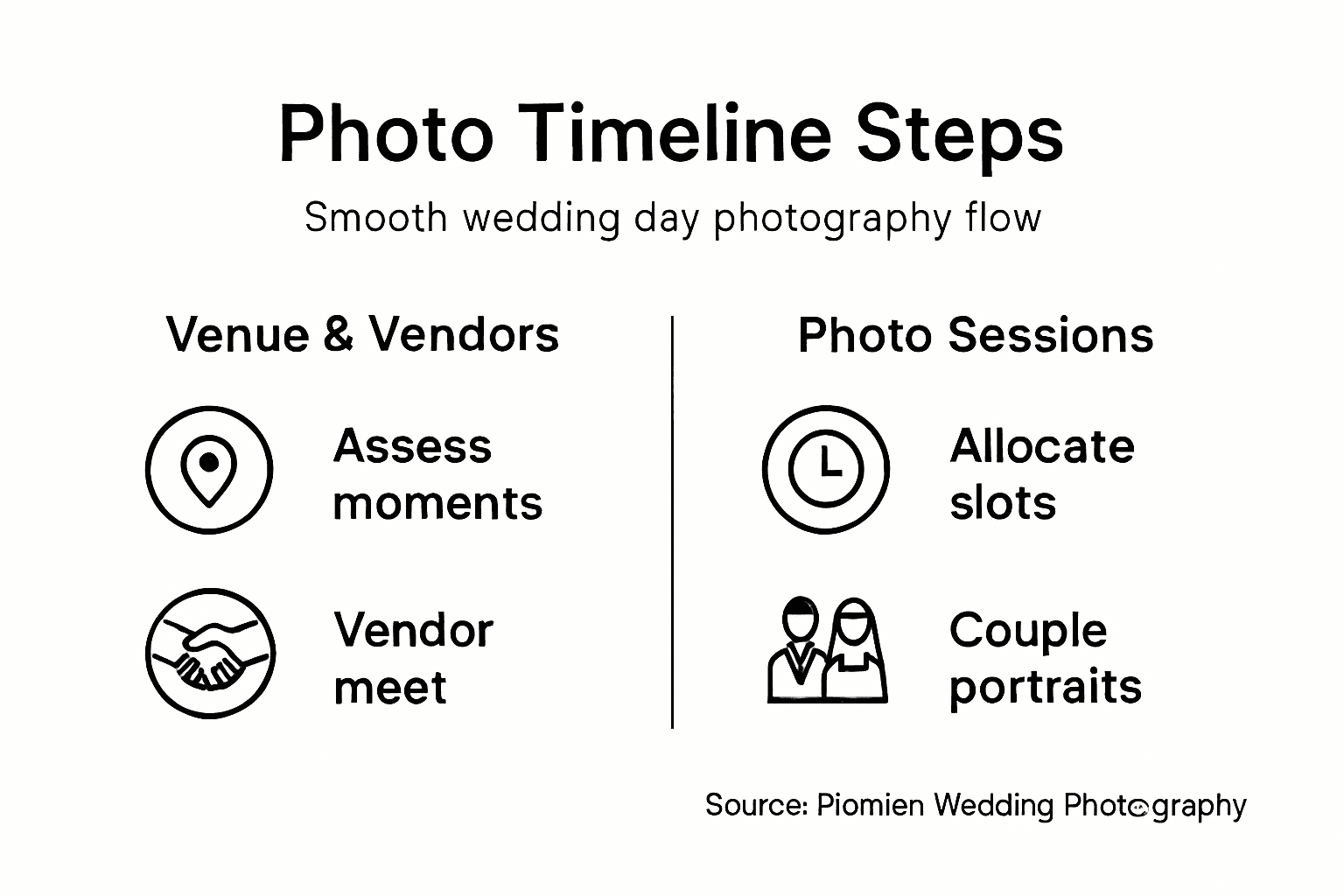
Here is a summary of common wedding timeline challenges and effective ways to address them:
| Challenge | Impact on Wedding Day | Effective Solution |
|---|---|---|
| Travel delays | Late ceremony or reception | Built-in buffer periods |
| Poor lighting | Unflattering photographs | Schedule key photos for golden hour |
| Vendor miscommunication | Missed moments or confusion | Shared digital timeline document |
| Overlapping schedules | Rushed or omitted events | Advance supplier coordination |
| Unclear instructions | Confused wedding party | Printed and digital timelines |
A well-planned wedding day timeline transforms potential chaos into choreographed celebration.
Pro tip: Create a digital shared document with your key vendors to ensure everyone understands the day’s logistics and timing.
Step 2: Coordinate timings with your suppliers
Ensuring a smooth wedding day requires strategic communication and collaboration with all your key suppliers. Effective vendor coordination transforms potential logistical challenges into a beautifully orchestrated celebration.
Your supplier coordination should focus on several critical interactions:
- Detailed consultation meetings with each vendor
- Shared digital timeline documents
- Clear expectations for key moment timings
- Specific photography and videography requirements
- Precise meal and entertainment schedules
Reach out to each supplier individually to discuss their specific role and timing requirements. Wedding day communication strategies emphasise the importance of collaborative planning. Photographers will advise on optimal lighting conditions, caterers can help schedule meal service, and entertainment teams can guide the energy flow of your reception.
Successful wedding planning is a symphony of coordinated professional efforts.
Insider advice: Schedule a final joint vendor meeting one month before your wedding to review the timeline and confirm everyone’s understanding of their roles and responsibilities.
Step 3: Allocate photo slots for each part of the day
Crafting a comprehensive photography timeline transforms your wedding day into a beautifully documented narrative. Wedding photography timeline strategies help capture every precious moment while maintaining a relaxed atmosphere.
Your photo allocation should include dedicated time slots for key moments:
- Getting ready photographs
- First look or reveal session
- Bridal party group shots
- Family formal photographs
- Ceremony coverage
- Couple’s romantic portraits
- Golden hour photoshoots
- Reception candid moments
- Evening celebration documentation
Strategic photo scheduling requires careful consideration of your wedding day logistics. Consider factors like venue locations, lighting conditions, and the size of your wedding party when allocating time. Professional photographers recommend building buffer periods between photo segments to accommodate unexpected delays or spontaneous moments.
Thoughtful photo planning transforms your wedding day into a beautifully choreographed visual story.
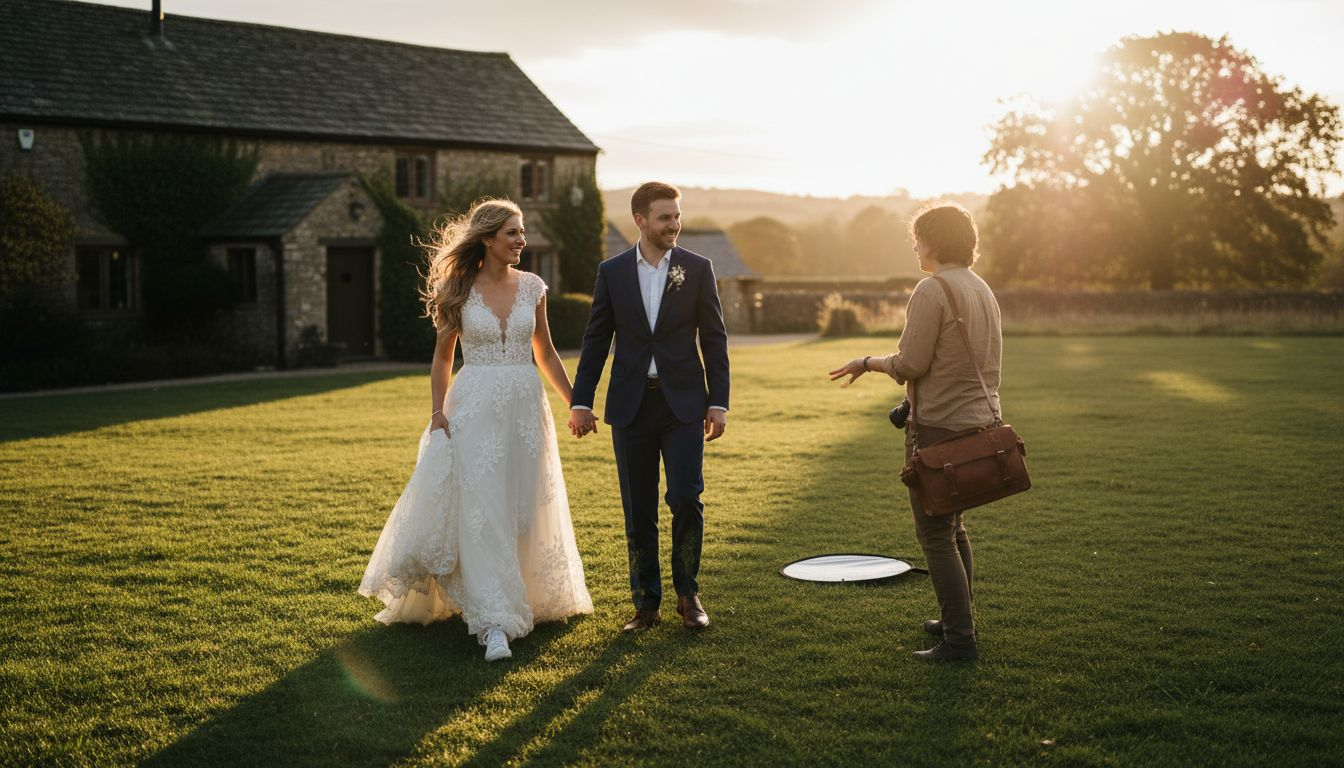
Insider advice: Reserve at least 30-45 minutes for your couple’s portrait session, preferably during the golden hour when natural lighting is most flattering.
Step 4: Communicate the timeline to your wedding party
Creating a seamless wedding day experience requires crystal-clear communication with your wedding party. Wedding photography timeline communication is crucial for ensuring everyone knows exactly where they need to be and when.
Your communication strategy should include several key elements:
- Digital timeline sharing via shared document or app
- Individual text or email briefings
- Printed timeline copies for each party member
- Specific instructions for photo locations
- Estimated duration for each segment
- Contact details for key coordinators
Effective wedding day coordination means providing detailed information well in advance. Send your complete timeline at least two weeks before the wedding, highlighting critical moments like photo sessions, ceremony start times, and reception transitions. Encourage your wedding party to ask questions and confirm their availability for specific time slots.
This table compares methods of communicating your timeline to suppliers and the wedding party:
| Method | Speed of Delivery | Clarity of Instructions |
|---|---|---|
| Shared digital document | Instant | High |
| Group chat/app | Instant | Moderate |
| Printed copies | Manual distribution | High |
| Individual emails | Slow-moderate | Moderate |
Clear communication transforms potential chaos into a beautifully orchestrated celebration.
Insider advice: Create a group chat or WhatsApp group specifically for wedding day coordination to ensure instant communication and quick problem-solving.
Step 5: Review and confirm your photo timeline plan
The final step in crafting your perfect wedding day photography timeline is a thorough review and confirmation with all key participants. Wedding photography timeline verification ensures every detail is meticulously planned and potential challenges are addressed in advance.
Your timeline review should encompass several critical elements:
- Detailed timeline walkthrough with photographer
- Venue-specific logistical considerations
- Potential location transition times
- Lighting and seasonal constraints
- Backup plans for unexpected scenarios
- Equipment and transportation logistics
Final timeline confirmation strategies recommend scheduling a comprehensive meeting with your photography team at least two weeks before the wedding. During this consultation, walk through each segment of the timeline, discuss potential challenges, and make any necessary adjustments. Confirm specific photo locations, discuss backup options for inclement weather, and ensure everyone understands their roles and responsibilities.
A meticulously reviewed timeline transforms uncertainty into confident celebration.
Insider advice: Create a digital shared document with the final timeline that all vendors can access and reference on the wedding day.
Capture Every Moment Stress-Free with Expert Planning and Professional Photography
Planning a wedding day photo timeline can feel overwhelming when faced with coordinating key moments, accommodating logistical challenges, and ensuring flawless communication. This guide highlights the importance of strategic timing, vendor collaboration, and clear instructions to avoid rushed or missed memories. If you want to bring peace of mind to your special day through beautifully authentic and candid photography that aligns perfectly with your timeline, expert support is essential.
At Plomien Wedding Photography, we specialise in capturing your wedding moments with professional ease whether in Yorkshire, prestigious venues like Hawkstone Hall or Hedsor House, or beyond. Our full-day coverage adapts to your detailed timeline, guaranteeing relaxed and heartfelt images without compromising your schedule. Discover how we transform complex photography plans into seamless celebrations by visiting our Uncategorized – Plomien Wedding Photography page for inspiration and helpful insights.

Take control of your wedding day memories now by exploring our tailored packages and testimonials that reflect our commitment to excellent service and natural storytelling. Let us help you create a stress-free photography experience that honours every special moment. Visit https://plomienweddingphotography.com today and make your wedding day beautifully unforgettable.
Frequently Asked Questions
How can I create a stress-free wedding day photo timeline?
To create a stress-free wedding day photo timeline, start by assessing key moments and the logistics of your venue. Map out essential segments like the ceremony, photo sessions, and reception while allowing buffer periods for potential delays.
What should I include in my wedding day photo timeline?
Your wedding day photo timeline should include time slots for getting ready, the ceremony, couple’s portraits, and reception candid moments. Ensure you also allocate time for family group shots and consider lighting conditions for your photos.
How do I coordinate with my wedding suppliers about the photo timeline?
Coordinate with your wedding suppliers by holding detailed meetings to discuss their roles and shared responsibilities. Use a digital document to outline the timeline and ensure everyone is aligned on key timing elements and expectations.
When should I communicate the photo timeline to my wedding party?
Communicate the photo timeline to your wedding party at least two weeks before the wedding. Share a digital document or printed copies to ensure everyone understands where they need to be and when.
What steps should I take to review my photo timeline before the wedding?
Before the wedding, review your photo timeline by conducting a thorough walkthrough with your photographer. Discuss potential logistical challenges and ensure everyone understands their responsibilities, making adjustments as necessary.