Booking your Yorkshire wedding photographer is an exciting milestone, but the process can feel daunting once contracts enter the conversation. Couples often worry about confusing clauses, hidden costs, or losing control over their images. A clear, written contract offers more than reassurance—it creates a transparent agreement defining expectations, payment schedules, copyright, and deliverables. Understanding the essentials of this document sets you up for a smooth experience and helps you confidently protect your memories long after the cake is cut.
Table of Contents
- Defining Wedding Photography Contracts And Myths
- Key Inclusions And Clauses Explained
- Coverage And Deliverables
- Payment Terms And Deposits
- Cancellation And Refund Policies
- Copyright And Usage Rights
- Typical Risks, Disputes, And How To Avoid Them
- Cancellation, Payment Terms, And Legal Protection
Key Takeaways
| Point | Details |
|---|---|
| Importance of Contracts | A wedding photography contract clarifies expectations and protects both parties in case of issues. |
| Essential Contract Clauses | Key elements include coverage details, payment terms, cancellation policy, and copyright ownership. |
| Myths Debunked | Common misconceptions about contracts include them being only for expensive photographers and that they lock you in without escape. |
| Understand Your Rights | Familiarise yourself with your rights regarding image usage, as copyright often allows only personal use unless negotiated otherwise. |
Defining Wedding Photography Contracts and Myths
A wedding photography contract is far more than paperwork—it’s your safety net. This document outlines exactly what your photographer will deliver, when they’ll deliver it, and what happens if things go wrong.
Think of it as a shared agreement between you and your photographer. Both parties know the expectations, timelines, and payment terms before the big day arrives.
What a Wedding Photography Contract Actually Includes
A proper contract covers several essential areas:
- Coverage details: How many hours you’re booking and what events are included
- Deliverables: Number of edited photographs, albums, or video files you’ll receive
- Deposit and payment schedule: When payments are due and how much is required upfront
- Cancellation policy: What happens if either party needs to withdraw
- Ownership and usage rights: Who owns the images and how they can be used
- Liability and insurance: What the photographer is responsible for if something goes wrong
- Timeline for delivery: When you’ll actually receive your edited photos
Each photographer structures their contract differently, but these core elements protect both you and the professional capturing your Yorkshire wedding.
A written contract prevents misunderstandings and gives you recourse if promises aren’t kept.
Common Myths About Wedding Photography Contracts
Many couples worry about contracts unnecessarily. Let’s clear up the confusion:
Myth 1: “Contracts are only for expensive photographers.”
Not true. Every professional photographer should provide a contract, regardless of their pricing. A contract demonstrates professionalism and clarity, which actually makes you more confident in their service.
Myth 2: “I’m locked in for ever if I sign.”
Contracts absolutely include cancellation clauses. These outline what happens if you need to postpone or cancel, typically with deposit implications depending on timing.
Myth 3: “The photographer owns my wedding photos.”
This depends entirely on your contract terms. Most photographers retain ownership for licensing purposes but grant you broad rights to print and display the images. Some contracts transfer full ownership—this is negotiable.
Myth 4: “Contracts are unreadable legal documents.”
Good contracts are written clearly. If you’re struggling to understand something, ask your photographer to explain it. Any professional worth booking will happily walk you through the terms.
Myth 5: “I don’t need a contract if I trust them.”
Trust is wonderful, but a contract protects both of you. Life happens—illness, emergencies, technical issues. A contract defines how these situations are handled fairly.
Why Yorkshire Couples Need This Protection
Your wedding is likely one of the most significant investments you’ll make this year. Understanding the role of your wedding photographer in preserving your day is crucial, and a solid contract ensures they’re equipped to do exactly that.
Whether you’re getting married at a North Yorkshire venue like Hawkstone Hall or hosting an intimate celebration in Leeds, a contract gives you peace of mind. It’s not about mistrust—it’s about clarity.
Pro tip: Read the contract at least a week before signing, take time to ask questions, and don’t feel pressured to sign immediately if something feels unclear.
Key Inclusions and Clauses Explained
Your contract should spell out exactly what you’re getting and under what conditions. Without clear clauses, misunderstandings happen fast, especially when emotions run high around your wedding day.
The best contracts are written in plain language, not legal jargon that makes your head spin. You should understand every single clause before you sign.

To help you understand the legal and practical significance of contract clauses, here is a summary comparing core wedding photography contract elements:
| Clause Type | Legal Impact | Couple Benefit | Photographer Benefit |
|---|---|---|---|
| Coverage & Deliverables | Defines scope of service | Clear expectations for services | Limits overwork and extra requests |
| Payment Terms & Deposits | Sets payment obligations | Prevents surprise costs | Secures income and schedule |
| Cancellation Policy | Outlines refund terms | Protects investment | Reduces income loss |
| Copyright & Usage | Clarifies ownership rights | Permits personal use | Safeguards artistic work |
| Liability Limits | Caps potential legal disputes | Sets recourse for problems | Prevents excessive penalties |
| Revision Scope | Defines editing rounds | Avoids disappointment | Streamlines workflow |
Coverage and Deliverables
Hours of coverage is perhaps the most critical detail. Your contract must specify precisely when the photographer arrives and when they leave. This prevents confusion on the day itself.
Your deliverables should be crystal clear:
- Number of edited final photographs you’ll receive
- File formats (digital downloads, USB, cloud storage, or printed albums)
- Whether engagement shoots or morning preparations are included
- What happens if you want additional photos beyond the package
Some photographers offer unlimited images; others cap it at 300 or 400. Know which applies to you.
Payment Terms and Deposits
Money matters deserve absolute clarity. Your contract should outline deposit amounts and payment schedules to prevent surprises.
Typical structures include:
- Deposit due at signing (often 25-50% of total cost)
- Final balance due before or immediately after the wedding
- Late payment penalties if applicable
Overtime rates matter too. If your wedding runs longer than expected, you need to know the hourly cost for additional coverage.
Cancellation and Refund Policies
Life happens. Your contract must detail what occurs if you need to cancel or reschedule. Most photographers offer:
- Full refund if cancelled more than 6 months before the date
- Deposit loss if cancelled within 3 months
- Zero refund if cancelled within 2 weeks
These timelines vary significantly. Read this section carefully.
Copyright and Usage Rights
This clause confuses many couples. Copyright ownership and usage rights determine what you can do with your wedding photos.
Commonly, photographers retain copyright (ownership) but grant you a perpetual licence to print, display, and share the images personally. This protects their work whilst giving you full use rights.
Some contracts prohibit commercial use without permission. Others forbid posting unedited images online. Know the limitations.
Liability Limitations
What happens if the photographer gets ill, has equipment failure, or misses a key moment? The contract should define their liability.
Most contracts limit liability to refunding the photography fees. They won’t compensate for emotional distress or other costs. This protects the photographer but also sets expectations.
Clear liability clauses prevent costly disputes when something goes wrong on the day.
Revision and Editing Scope
Your photographer likely offers unlimited edits within reason. But endless revision requests can strain the process. Some contracts cap revision rounds at two or three.
The contract may also specify the artistic style—whether they edit for natural tones, vibrant colours, or black and white conversion. This prevents disappointment when you receive your images.
Pro tip: Ask your photographer to walk you through each clause section by section during your initial consultation, and request clarification on any terms that feel vague or concerning.
Understanding Copyright and Image Usage Rights
Copyright ownership is where many couples get confused. Your photographer almost certainly owns the copyright to your wedding images, but that doesn’t mean you can’t use them.
Think of it this way: the photographer owns the artwork, but you own the right to enjoy and share it. These are two separate things.
Who Actually Owns Your Wedding Photos
In the United Kingdom and most countries, the photographer automatically owns copyright unless the contract states otherwise. This is the default legal position.
Your contract should explicitly outline this. It might say something like: “The photographer retains all copyright and intellectual property rights to the images.”
Some photographers do transfer full copyright to couples for an additional fee. This is rare and usually costs significantly more. Most couples don’t need or want this.
What Rights You Actually Get
Owning copyright and granting usage rights are different matters. Photo licensing and usage rights specify exactly what you can do with your wedding images.
Your contract typically grants you these permissions:
- Print unlimited physical copies for personal use
- Display photos in your home
- Share images on social media and with family
- Create albums and photobooks
- Use in personal digital archives
Most contracts prohibit:
- Commercial use (selling prints or using images in advertising)
- Posting unedited or watermarked images online
- Reproducing images without permission
- Sublicensing images to third parties
Read your specific contract to know which applies.
Commercial Use and Restrictions
If you want to use your wedding photos commercially—perhaps for a business, wedding planning blog, or professional publication—you need explicit permission. This typically requires negotiating separate licensing terms.
Social media sharing is usually permitted, but check whether the contract requires the images remain unedited with photographer credit included.
Editing and Modification Rights
Your contract should specify whether you can edit the images yourself. Most allow personal edits for cropping and colour adjustment.
However, publishing heavily modified or filtered versions might violate the contract. The photographer wants their edited work representing their style.
Your usage rights are only as broad as what your contract permits, so read this section word by word.
Digital Files and Archiving
Ask whether your contract includes permanent digital files or just physical prints. Modern couples usually receive downloadable image files stored in the cloud or on USB.
Understand storage duration too. Will your photographer keep backups indefinitely, or only for a set period? What happens if you lose your own copies years later?
Protecting the Photographer’s Work
Copyright protection benefits you both. It stops others from using your wedding images without permission. It also ensures your photographer gets credit for their work.
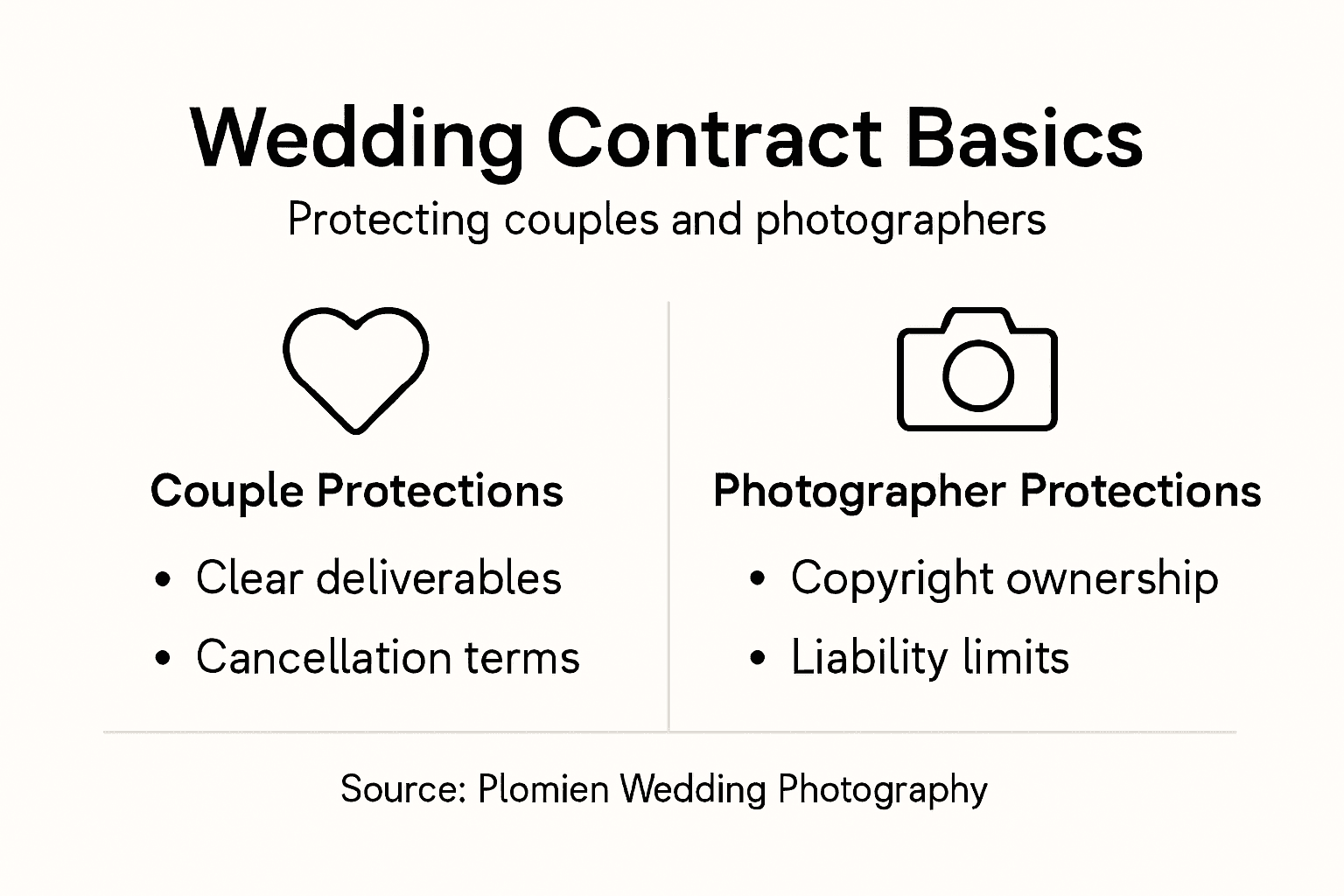
This isn’t about the photographer being restrictive—it’s about protecting creative work and maintaining professional standards across the industry.
Pro tip: Request a written summary of your usage rights in simple language, separate from the full contract, so you can refer to it confidently when sharing or using your images later.
Typical Risks, Disputes, and How to Avoid Them
Risks exist in every service contract, and wedding photography is no exception. The good news is most disputes stem from preventable causes—vague terms, poor communication, and unclear expectations.
Understanding common pitfalls helps you sidestep conflict entirely and protects both you and your photographer.
Scope Creep and Expectations Mismatches
Scope creep happens when requests expand beyond what was agreed. Your photographer arrives expecting a 6-hour coverage package, but you’ve asked friends to request additional shots, longer timings, and special requests.
This frustrates photographers and compromises photo quality. Your contract prevents this by explicitly defining what’s included and what costs extra.
Common scope creep situations:
- Expecting engagement shoots when not included in the package
- Adding morning-after coverage without discussing fees
- Requesting film and photography when only photography was contracted
- Asking for significant edits beyond the agreed revision rounds
Clarity prevents resentment on both sides.
Payment Disputes
Money creates tension faster than almost anything else. Late payments, unexpected charges, and disagreements about final costs damage even positive working relationships.
Common legal risks in wedding photography include payment disputes stemming from unclear fee structures. Your contract should specify:
- Exact deposit amount and due date
- Final balance payment timing
- Whether overtime is charged hourly and at what rate
- Penalties for late payments
- What happens if you request additional services
Knowing costs upfront prevents shock and disappointment.
Last-Minute Cancellations
Life throws curveballs. Your contract must clearly outline cancellation consequences, including how much of your deposit you lose based on timing.
Cancellations within weeks of the wedding are devastating for photographers—they lose income and cannot easily rebook. Most contracts reflect this with stricter refund policies.
Copyright and Usage Right Conflicts
Misunderstandings about who owns images and how they can be used create legal headaches. Your contract prevents this by explicitly stating:
- The photographer retains copyright
- Your permitted uses (personal sharing, printing, displays)
- Prohibited uses (commercial licensing, reselling)
- Whether social media posting requires watermarks or credits
These clarifications eliminate confusion later.
Communication and Expectation Setting
Copyright violations and scope misunderstandings remain top legal risks for photographers. Yet many result from poor communication, not intentional wrongdoing.
Schedule a consultation before signing. Ask questions about anything unclear. Discuss your vision, style preferences, and any unusual requirements.
Great photographers welcome these conversations.
Most disputes vanish when expectations are crystal clear from the start.
Before Signing Your Contract
Take time to understand every clause. Here’s your checklist:
- Read the entire contract without time pressure
- Identify clauses you don’t understand
- Ask your photographer to explain them in plain language
- Request written clarification if verbal explanations aren’t sufficient
- Only sign when you feel completely confident
Your photographer should be patient and thorough. If they rush you, that’s a red flag.
Building a Strong Working Relationship
The strongest protection against disputes is a healthy photographer-couple relationship. Stay in touch. Share your vision clearly. Respond promptly to communications. Treat your photographer professionally.
When both parties prioritise clear communication and mutual respect, contracts remain background paperwork—not weapons.
Pro tip: Keep a copy of your signed contract easily accessible and review it before your wedding day, noting specific deliverables, timelines, and contact procedures in case questions arise.
Cancellation, Payment Terms, and Legal Protection
Payment and cancellation clauses form the financial backbone of your contract. They protect your investment whilst also protecting your photographer’s business. Getting these details right prevents misunderstandings that could become costly disputes.
These sections deserve careful attention because money matters create the most tension in service agreements.
Understanding Payment Structures
Most photographers use a deposit and balance system. You pay a portion upfront to secure your date, then settle the remainder before or after the wedding.
Typical payment breakdowns look like this:
- Deposit: 25-50% of total cost due upon signing the contract
- Balance: remaining amount due on the wedding day or within a specified timeframe
- Additional services: overtime, extra prints, or album upgrades charged separately
Your contract should specify exact amounts and due dates, not vague percentages.
Deposit Policies and What They Protect
Deposits aren’t just money—they’re commitments. When you pay a deposit, your photographer blocks out that wedding date, turns away other couples, and plans their schedule around you.
If you cancel, the photographer loses that income. Most contracts make deposits non-refundable to compensate for this loss. This is standard practice across the industry.
However, cancellation clauses should clearly define refund policies based on notice periods. A cancellation six months before might differ significantly from one two weeks before.
Typical Cancellation Timelines
Most photographers structure refunds this way:
- More than 6 months before: full refund or rescheduling option
- 3-6 months before: deposit forfeited, no refund
- 1-3 months before: deposit forfeited, may lose additional fees
- Less than 1 month before: full payment due, no refunds
These timelines vary by photographer. Some offer more generous rescheduling options. Others have stricter policies. Your contract states which applies to you.
For reference, here are typical refund outcomes based on cancellation timing in wedding photography contracts:
| Cancellation Notice Period | Usual Refund Outcome | Deposit Status |
|---|---|---|
| More than 6 months | Full refund or reschedule | Deposit refunded |
| 3-6 months | Deposit forfeited | No refund |
| 1-3 months | Deposit and part payment lost | Partial refund possible |
| Less than 1 month | Full payment due | No refunds at all |
Force Majeure and Unforeseen Circumstances
Force majeure clauses protect both parties from uncontrollable events—severe illness, natural disasters, or government restrictions. These are different from typical cancellations.
A good contract addresses what happens if either party cannot fulfil their obligations due to circumstances beyond their control. Some photographers offer rescheduling rather than refunds in these situations.
Late Payment Penalties
Your contract should specify consequences for late payments. Photographers depend on final payments to cover editing, hosting, and album printing.
Common penalties include:
- Interest charges on overdue balances
- Withheld deliverables until payment clears
- Rescheduling requirements if balance isn’t paid before the wedding
Understanding these penalties motivates timely payment and prevents last-minute stress.
Payment Methods and Proof
Payment policies and consequences of missed payments must specify accepted methods and how you’ll receive receipts. Digital transfers, cheques, or card payments should all be clearly outlined.
Request written confirmation each time you pay. This creates a clear payment history protecting both you and your photographer.
Protecting Yourself Financially
Before signing, ensure you understand:
- Exact total cost with no hidden fees
- What’s included in your package price
- Costs for any add-ons or upgrades
- Payment schedule with specific dates
- What happens to your money if circumstances change
Clear payment terms eliminate financial surprises and build trust between you and your photographer.
Rescheduling Options
Some contracts allow date rescheduling instead of refunds. This might work if you need to postpone your wedding but still want the same photographer.
Confirm whether rescheduling is available, whether it requires the same deposit, and how far in advance you must request it.
Pro tip: Set calendar reminders for all payment deadlines at least two weeks in advance, ensuring funds are available and transfers complete well before the due date.
Secure Your Wedding Memories with Confidence and Clarity
Understanding the critical elements of a wedding photography contract empowers you to protect your special day and investment. From clear coverage details to cancellation policies and copyright rights, knowing exactly what to expect can ease your planning stress and ensure your photographer delivers unforgettable moments without surprises. At Plomien Wedding Photography, we prioritise transparency alongside authentic, heartfelt imagery, helping you feel confident every step of the way.

Explore our Uncategorized – Plomien Wedding Photography insights and discover how our professional team commits to clear, fair agreements that safeguard your day. View our carefully crafted packages and portfolio at Plomien Wedding Photography to start a conversation about capturing your wedding with trust and excellence. Don’t wait to secure coverage that protects your most cherished moments with a thorough contract designed for peace of mind.
Frequently Asked Questions
What should be included in a wedding photography contract?
A wedding photography contract should include coverage details, deliverables, payment terms, cancellation policy, ownership and usage rights, liability limits, and the timeline for delivery of your photos.
Are wedding photography contracts only necessary for expensive photographers?
No, every professional photographer should provide a contract, regardless of their pricing. A contract ensures professionalism and clarity, helping you feel more confident in their service.
What happens if I need to cancel my wedding photography service?
Most contracts include a cancellation policy outlining the consequences based on the timing of the cancellation. Typically, cancellations made well in advance may allow for a full refund, while last-minute cancellations could result in losing your deposit or full payment.
Do I own the rights to my wedding photos?
Generally, the photographer retains copyright, but contracts typically grant you a perpetual licence to print and share the images for personal use. It’s essential to read the contract details to understand your specific rights.
Recommended
- Why Wedding Photojournalism Matters for Couples – Plomien Wedding Photography
- Why Invest in Wedding Photography: Lasting Impact – Plomien Wedding Photography
- 7 Essential Wedding Photo Must-Haves for Lasting Memories – Plomien Wedding Photography
- Role of Wedding Photographer – Preserving Your Story – Plomien Wedding Photography