You’ve spent months planning every detail of your Yorkshire wedding, from the venue to the flowers, but have you thought about how to communicate your photography vision? Many couples assume their photographer will instinctively understand what they want, only to feel disappointed when the final images don’t match their expectations. The truth is, effective communication improves satisfaction by 25-30% when couples provide detailed guidance. This guide shows you exactly how to brief your wedding photographer, ensuring your photos capture every moment you’ve dreamed of.
Table of Contents
- Understanding The Importance Of A Detailed Wedding Photographer Brief
- Preparing Your Wedding Photography Brief: Style Guide, Timeline, And Preferences
- Communicating Sensitive Details And Leveraging Visual Inspiration
- Planning For The Venue And Lighting: Ensuring Optimal Photo Quality
- Discover Expert Wedding Photography Services In Yorkshire
- How To Brief Wedding Photographer Frequently Asked Questions
Key takeaways
| Point | Details |
|---|---|
| Clear communication matters | Providing detailed briefs improves photo satisfaction rates and reduces post-wedding disappointment significantly |
| Style guides clarify vision | A comprehensive style guide transforms vague preferences into actionable direction for your photographer |
| Timelines capture moments | Sharing your wedding day schedule helps photographers anticipate key moments and lighting conditions |
| Family dynamics need discussion | Communicating sensitive relationships allows photographers to navigate delicate situations with care and respect |
| Visual inspiration aligns expectations | Mood boards and example photos increase the number of desired shots captured by your photographer |
Understanding the importance of a detailed wedding photographer brief
Think of your photographer brief as a roadmap. Without it, you’re asking someone to navigate unfamiliar territory with no directions. When couples invest time in creating a thorough brief, they report an 85% satisfaction rate with photos aligning to their vision. That’s a remarkable difference compared to couples who provide minimal guidance and later request extensive editing changes.
Your brief serves multiple purposes beyond just listing preferences. It builds trust between you and your photographer, establishes realistic expectations, and creates accountability on both sides. When you articulate exactly what matters most, your photographer can prioritise those moments and allocate time accordingly. This proactive approach prevents the common scenario where couples realise after the wedding that crucial shots were missed simply because the photographer didn’t know they mattered.
Consider what happens without proper communication. Photographers might focus on traditional posed shots when you wanted candid moments, or they might miss important family members because you didn’t specify who needed to be photographed. These misunderstandings create disappointment that could have been easily avoided. Research shows that detailed questionnaires and pre-wedding consultations significantly boost outcomes, which is why professional wedding photography practices emphasise thorough briefing processes.
“The difference between good wedding photos and exceptional ones often comes down to how well the couple communicated their vision beforehand. A detailed brief transforms guesswork into precision.”
The investment you make in preparing your brief pays dividends throughout your wedding day. Your photographer arrives confident about your expectations, knows which moments to anticipate, and understands your style preferences. This preparation allows them to work efficiently and creatively, rather than constantly checking whether they’re meeting your unstated expectations. When you’re ready to choose your wedding photographer, remember that the best professionals welcome detailed briefs because they know it leads to happier couples and better portfolios.
Preparing your wedding photography brief: style guide, timeline, and preferences
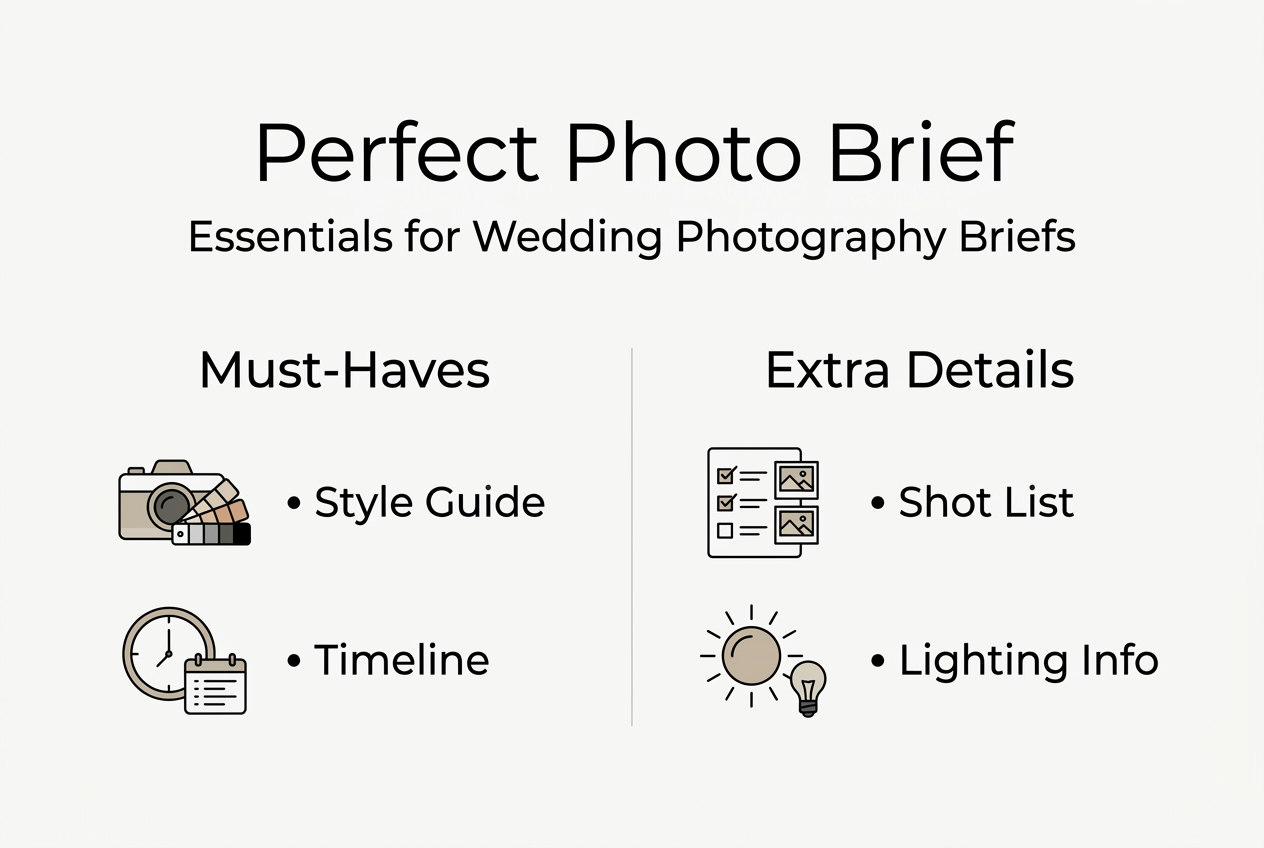
Your style guide forms the foundation of effective communication with your photographer. Rather than saying you want “romantic photos” or “natural lighting,” a proper style guide includes mood, colour palette, and lighting preferences that give concrete direction. Start by identifying your overall aesthetic. Do you prefer light and airy images with soft tones, or dramatic photos with rich colours and contrast? Are you drawn to film-style photography with grain and muted tones, or crisp digital images with vibrant colours?
Your colour palette matters more than you might think. If your wedding features blush pinks and sage greens, mention this so your photographer can adjust their editing to complement these tones. Similarly, discuss lighting preferences. Do you love the golden glow of sunset photos, or do you prefer the crisp clarity of midday light? These details help your photographer plan the day’s schedule and choose appropriate equipment.
Essential elements for your style guide:
- Overall mood and aesthetic you’re aiming for
- Preferred colour tones and editing style
- Lighting preferences and how they align with your venue
- Balance between posed portraits and candid moments
- Any specific techniques you love or want to avoid
Your wedding timeline deserves equal attention. Providing a detailed timeline increases capturing key moments by 30% because photographers can anticipate transitions and position themselves strategically. Share not just the major events like the ceremony and reception, but also the smaller moments that matter to you. When are you getting ready? What time does the ceremony start? How long is cocktail hour? When will you cut the cake?
| Timeline element | Why it matters | Details to include |
|---|---|---|
| Getting ready | Captures anticipation and preparation moments | Start time, location, who will be present, natural light availability |
| Ceremony | Ensures photographer positions correctly | Start time, duration, venue layout, any restrictions on movement |
| Couple portraits | Plans for optimal lighting conditions | Preferred time slot, location options, how much time available |
| Reception events | Anticipates key moments | First dance, speeches, cake cutting, special surprises |
Be specific about your shot preferences. Instead of saying “we want family photos,” list exactly which family configurations you need. Do you want a photo with just your parents? One with all siblings? Extended family groups? The more specific you are, the less time you’ll spend organising people on the day. Similarly, communicate your “don’t wants” clearly. If you dislike overly posed shots or prefer not to have photos during the ceremony, say so upfront.
Pro Tip: Create a detailed wedding day timeline that includes buffer time between events. This gives your photographer flexibility to capture spontaneous moments without rushing, and it accounts for the inevitable delays that happen on wedding days.
When discussing wedding photo styles, use specific examples rather than generic terms. Show your photographer images that resonate with you, pointing out exactly what you love about each one. Is it the composition, the lighting, the emotion captured, or the editing style? This visual reference combined with your verbal explanation creates crystal clear direction.
Communicating sensitive details and leveraging visual inspiration
Family dynamics can be complicated, and your wedding day might involve situations that require careful handling. Perhaps your parents are divorced and prefer not to be photographed together, or maybe there’s a family member who’s uncomfortable being photographed. Discussing family dynamics allows photographers to navigate moments with care and avoid awkward situations that could dampen the celebration.
Be honest about relationships that need sensitive handling. Your photographer isn’t there to judge; they simply need to know how to approach group photos tactfully. If certain family members shouldn’t be in the same frame, or if someone prefers to stay out of photos entirely, communicate this clearly. Similarly, share any surprises you have planned. If you’re organising a special dance, a surprise guest, or an unexpected element, your photographer needs advance warning to position themselves appropriately and capture the reactions.
Key sensitive details to discuss:
- Family relationship dynamics that affect group photos
- Any guests who prefer not to be photographed
- Planned surprises or special moments
- Cultural or religious considerations for photography
- Any anxieties you have about being photographed
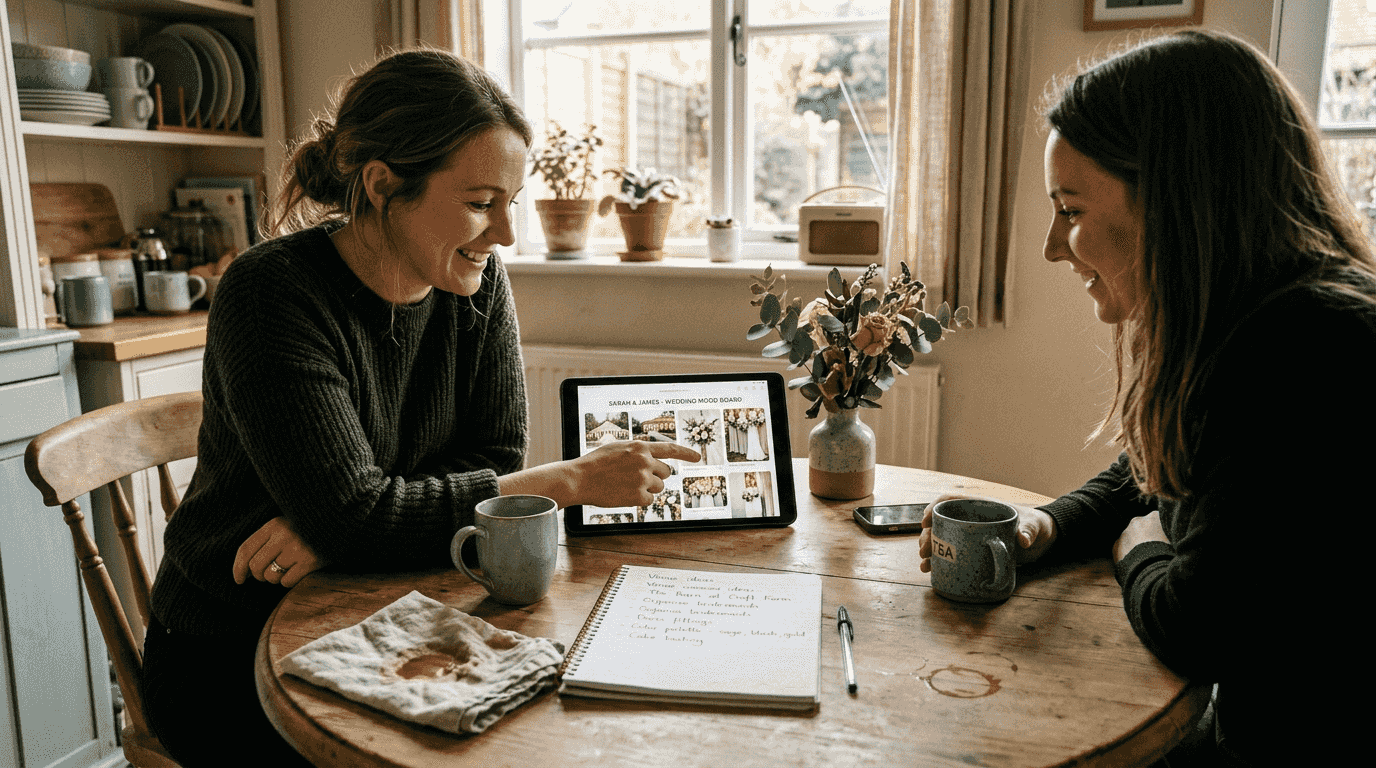
Visual inspiration transforms abstract ideas into concrete examples. Rather than trying to describe the exact mood you want, show your photographer images that capture it. Mood boards increase desired shots captured by 25% because they eliminate ambiguity and create a shared visual language between you and your photographer. Create a Pinterest board, save Instagram posts, or compile a folder of images that represent your vision.
When sharing inspiration photos, be specific about what you love. Don’t just save an entire wedding gallery; instead, highlight particular shots and explain why they resonate. Maybe you love how a photographer captured the bride laughing during getting ready, or perhaps you’re drawn to a specific composition for couple portraits. This specificity helps your photographer understand not just what you want to see in your photos, but why those elements matter to you.
Pro Tip: Organise your inspiration photos by category, such as getting ready shots, ceremony moments, couple portraits, and reception details. This makes it easier for your photographer to reference during different parts of your day and ensures no style preferences get overlooked.
Your mood board should include a range of examples that collectively paint a picture of your desired outcome. Include shots that show your preferred editing style, composition preferences, and the types of moments you want captured. If you love candid wedding photography, make sure your examples reflect that priority. If you want a mix of candid and posed shots, show examples of both in the proportions you prefer.
Remember that inspiration photos serve as guidance, not rigid templates. Your photographer will adapt these ideas to your unique venue, lighting conditions, and personalities. The goal is to align expectations and establish a shared vision, not to recreate someone else’s wedding exactly. Trust your photographer to use your inspiration as a starting point for creating images that are authentically yours.
Planning for the venue and lighting: ensuring optimal photo quality
Venue lighting dramatically affects your wedding photos, yet many couples overlook this crucial factor when briefing their photographer. Natural light streaming through large windows creates different opportunities than a dimly lit historic hall with candlelight. Poor or mixed lighting increases equipment needs by 15-20% and can limit the types of shots possible without additional lighting equipment. Understanding your venue’s lighting conditions helps you and your photographer prepare appropriately.
Schedule a venue visit with your photographer if possible, or at minimum, provide detailed information about lighting conditions throughout the day. When does natural light flood the ceremony space? Are there windows in the getting ready rooms? Does the reception venue have warm tungsten lighting, cool fluorescent lights, or a mix of both? These details allow your photographer to plan their equipment setup and anticipate challenges before they arise.
Consider how lighting changes throughout your wedding day. The soft morning light during getting ready looks completely different from the dramatic evening lighting during your first dance. If you’re having an outdoor ceremony, discuss backup plans for overcast skies or harsh midday sun. Yorkshire weather can be unpredictable, so having contingency plans ensures beautiful photos regardless of conditions.
| Lighting scenario | Photography considerations | Planning recommendations |
|---|---|---|
| Bright natural light | Creates soft, flattering images with minimal equipment | Schedule couple portraits during golden hour, use window light for getting ready |
| Low indoor lighting | Requires additional equipment and may limit candid opportunities | Discuss flash usage preferences, allow extra time for setup |
| Mixed lighting sources | Can create colour casts that need correction | Inform photographer about all light sources, plan key shots in consistent lighting |
| Outdoor variable conditions | Weather dependent, requires backup plans | Have indoor alternatives ready, discuss preferred approach for different weather |
Your wedding day timeline should account for optimal lighting conditions. If you’re dreaming of romantic sunset couple portraits, schedule time around golden hour. If your ceremony is at midday in summer, discuss how your photographer will handle harsh overhead light. These conversations might influence your timeline decisions, ensuring you allocate time when lighting conditions support your vision.
Good lighting allows your photographer to capture natural, authentic moments without excessive editing. When venues have beautiful natural light, photos require less post-processing and maintain a more organic feel. Conversely, challenging lighting situations might necessitate more dramatic editing to achieve the desired look. Understanding this relationship helps set realistic expectations about the final editing style.
Discuss any venue restrictions that might affect photography. Some churches prohibit flash during ceremonies, while certain historic venues have rules about where photographers can stand. Knowing these limitations in advance allows your photographer to plan alternative approaches that respect venue rules while still capturing the moments that matter. Share any venue guidelines you’ve received, and consider asking your venue coordinator about photography-specific policies during your planning process.
Discover expert wedding photography services in Yorkshire
Now that you understand how to brief your photographer effectively, you’re ready to work with professionals who value clear communication and deliver exceptional results. At Plomien Wedding Photography, we specialise in translating couples’ visions into stunning visual stories that capture authentic Yorkshire wedding moments. Our approach combines thorough pre-wedding consultations with expert technical skills, ensuring your brief transforms into the photos you’ve imagined.
Explore why investing in professional wedding photography creates lasting value beyond your wedding day. Our comprehensive guide to choosing your wedding photographer walks you through essential considerations, whilst our Yorkshire wedding timeline planning resource helps you schedule your day for optimal photo opportunities. We’re here to ensure your wedding photos exceed expectations.
How to brief wedding photographer frequently asked questions
How far in advance should I brief my wedding photographer?
Brief your photographer at least two to three months before your wedding day. This timeline allows for detailed discussions, venue visits if needed, and any adjustments to your wedding schedule based on photography considerations. Earlier communication is always better, particularly if you’re planning a complex timeline or have specific technical requirements.
What format should my photographer brief take?
Your brief can combine written documents, visual mood boards, and verbal discussions. Create a written outline covering your timeline, style preferences, and must-have shots, then supplement this with a Pinterest board or folder of inspiration images. Schedule a video call or in-person meeting to discuss everything thoroughly, ensuring your photographer can ask clarifying questions.
How detailed should my shot list be?
Your shot list should be specific enough to capture priorities without being so prescriptive that it limits creative opportunities. Focus on must-have combinations for family photos and any unique moments specific to your wedding. Trust your photographer’s expertise for standard coverage whilst being detailed about anything non-traditional or particularly important to you.
Should I share my mood board before booking my photographer?
Yes, sharing visual inspiration during the booking process helps ensure your photographer’s style aligns with your vision. If their portfolio and your mood board reflect completely different aesthetics, it might indicate a mismatch. The best results come when you choose a photographer whose natural style complements your preferences, then refine details through your brief.
How do I communicate lighting preferences without technical knowledge?
You don’t need technical expertise to communicate lighting preferences effectively. Use descriptive terms like “bright and airy,” “moody and dramatic,” or “soft and romantic.” Share example photos that demonstrate the lighting style you love, and your photographer will translate these preferences into technical execution. Focus on how you want your photos to feel rather than specific camera settings.
What if my partner and I have different photography preferences?
Discuss your differences together before briefing your photographer, finding compromise where possible. Perhaps one of you loves posed portraits whilst the other prefers candid shots; your photographer can ensure a balanced mix. Be honest about any disagreements during your consultation so your photographer can suggest solutions that satisfy both of you.
Recommended
- 7 Essential Best Wedding Photography Practices for Couples – Plomien Wedding Photography
- How to Choose Wedding Photographer for Perfect Memories – Plomien Wedding Photography
- Wedding Videography Coordination Guide for Seamless Events – Plomien Wedding Photography
- How to Choose Wedding Photography Packages with Confidence – Plomien Wedding Photography