TL;DR:
- Storytelling wedding films create emotional narratives, focusing on authentic moments and feelings.
- Techniques include unobtrusive filming, layered audio, and non-linear editing to enhance emotional impact.
- Trusting your videographer and prioritizing genuine moments leads to treasured, authentic wedding films.
Most couples assume a wedding film is simply a polished recording of the day’s events. But there is a profound difference between footage that documents and a film that truly moves you. Storytelling transforms wedding films from mere documentation into emotional narratives that preserve the essence of your love story, focusing on authentic moments rather than staged highlights. In this guide, we explore what storytelling in wedding videography actually means, the techniques that bring it to life, how it compares to traditional approaches, and the practical steps you can take to ensure your film genuinely captures who you are as a couple.
Table of Contents
- What is storytelling in wedding films?
- Key techniques for storytelling in wedding videography
- Storytelling vs traditional wedding films: What’s the real difference?
- How to ensure your wedding film tells your authentic story
- The reality most couples miss about wedding film storytelling
- Bring your love story to life with expert wedding videography
- Frequently asked questions
Key Takeaways
| Point | Details |
|---|---|
| Storytelling drives emotion | A narrative approach elevates wedding films into lasting, heartfelt keepsakes. |
| Choose the right style | Compare storytelling and traditional options to find the approach that best suits your priorities. |
| Communicate your vision | Work closely with your videographer to ensure your unique story and genuine moments are captured. |
| Avoid over-staging | Authentic, candid moments create the most meaningful wedding films in the long run. |
What is storytelling in wedding films?
At its heart, storytelling in wedding films is about creating a narrative rather than a record. Where traditional videography captures events in chronological order, a storytelling approach weaves together moments, emotions, and audio to create something that feels personal and timeless. It is less about showing what happened and more about conveying how it felt.
Think of it this way. A traditional wedding film might open with guests arriving, move through the ceremony, and close with the first dance. A storytelling film might open with a quiet voice note one partner sent the other, cut to tearful vows, and layer in laughter from the speeches before circling back to a stolen glance during the first dance. The events are the same. The emotional experience is entirely different.
As recognised within the industry, storytelling is a distinct style alongside documentary, cinematic, traditional, and vintage approaches. Each has its place, but storytelling stands apart because it prioritises meaning over coverage. It asks: what is the emotional truth of this day?
Here is what sets storytelling wedding films apart:
- Narrative structure: The film has a beginning, middle, and end shaped by emotion, not the clock.
- Authentic moments: Candid reactions, quiet in-between moments, and unscripted exchanges are treated as gold.
- Layered audio: Vows, speeches, ambient sound, and music are woven together to build feeling.
- Bespoke editing: Every film is shaped around the couple’s unique personality and story.
- Timeless quality: Because it focuses on genuine emotion rather than trends, it ages beautifully.
“A storytelling wedding film does not just show you your wedding day. It takes you back to exactly how it felt.”
If you are curious how this approach extends beyond video, storytelling in wedding photography follows the same philosophy, capturing images that speak without needing a caption.
Key techniques for storytelling in wedding videography
Having defined storytelling, let us explore the techniques that filmmakers use to actually achieve it. Because the magic you see on screen is the result of very deliberate craft behind the camera and in the edit suite.
The core mechanics of storytelling videography include unobtrusive documentary-style filming to capture candid emotions, layered audio from vows and speeches, multi-camera setups for ceremony coverage, and emotive non-linear editing to build emotional arcs. Each element plays a specific role.
Here are the key techniques in practice:
- Documentary-style filming: The videographer stays unobtrusive, blending into the background so guests and the couple behave naturally. This is the foundation of documentary wedding videography and is what makes those spontaneous, genuine moments possible.
- Layered audio: Vows, speeches, and ambient sounds like laughter or music are recorded separately and then layered in the edit. This audio tapestry is often what makes viewers cry.
- Multi-camera coverage: Using two or more cameras during the ceremony ensures no single moment is missed, giving the editor rich material to work with.
- Non-linear editing: Rather than following the timeline of the day, the editor shapes the film around emotional peaks. A speech excerpt might open the film; the ceremony might follow. This keeps viewers emotionally engaged.
- Raw to edited ratio: For every minute of finished film, a skilled editor typically reviews around 20 minutes of raw footage. That level of curation is what separates a storytelling film from a simple recording.
Capturing candid wedding moments is only possible when the videographer is trusted to work quietly and instinctively. Couples who try to direct every shot often inadvertently lose the very moments that would have made them weep with joy.
Pro Tip: Ask your videographer to record a clean audio track of your vows separately, in addition to the camera microphone. This gives the editor a fallback and often results in clearer, more emotionally resonant audio in the final film.
Storytelling vs traditional wedding films: What’s the real difference?
Now that we understand the key storytelling mechanics, let us see how this approach compares to traditional wedding videography, because the differences are more significant than most couples realise.
Cinematic storytelling edits are typically shorter, running between 3 and 20 minutes, and are designed for emotional engagement. Traditional edits are longer, often lasting between one and four hours or more, and prioritise complete event coverage over emotional arc. Neither is objectively better. They serve different needs.
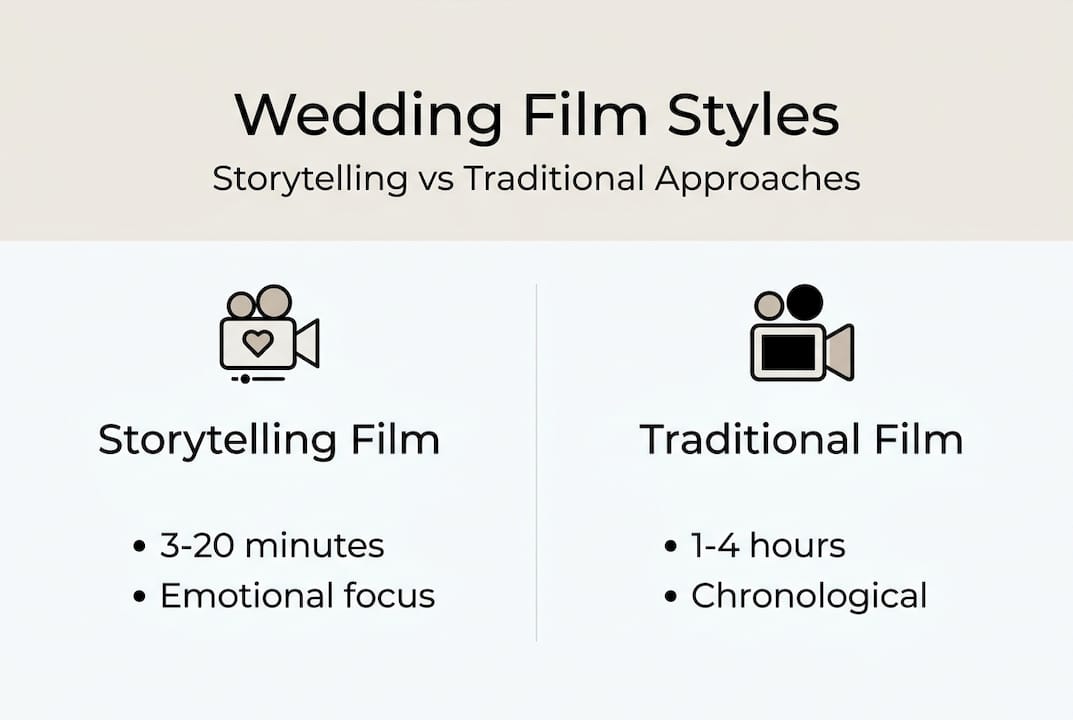
| Feature | Storytelling film | Traditional film |
|---|---|---|
| Length | 3 to 20 minutes | 1 to 4+ hours |
| Structure | Non-linear, narrative-driven | Chronological |
| Emotional impact | High | Moderate |
| Event completeness | Selective | Comprehensive |
| Rewatchability | Very high | Lower |
| Editing complexity | High | Moderate |
As research into wedding film formats confirms, storytelling offers emotional depth but may omit completeness, while traditional provides completeness but less engagement. The good news is that you do not have to choose one exclusively.
Hybrid packages are increasingly popular, and wedding filmmaking trends show that couples are requesting both a short storytelling highlight film and a longer full-event edit. This gives you the best of both worlds: a 5-minute film you will watch on every anniversary, and a full recording your family can revisit for years.
80% of UK couples now prefer narrative-driven films over traditional chronological edits, reflecting a wider cultural shift towards valuing emotional resonance over comprehensive coverage.
Understanding the advantages of hiring a videographer who specialises in storytelling becomes clearer when you consider that a beautifully crafted short film is something you will genuinely return to, whereas a four-hour recording often sits unwatched on a hard drive.
How to ensure your wedding film tells your authentic story
Armed with a clear understanding of the approaches available, here are the practical steps you can take to make sure your film genuinely reflects who you are.
The most important thing you can do is communicate your story to your videographer before the wedding day. Share what matters most to you as a couple, the inside jokes, the meaningful songs, the family members whose reactions you want captured. A great videographer will use this as a creative brief.
When selecting a videographer for authentic moments, ask these key questions:
- Do you favour a candid, documentary approach or do you direct shots?
- How do you handle audio recording for vows and speeches?
- Can I see a full-length example film, not just a highlights reel?
- How do you approach couples who feel camera-shy?
- What is your editing style and how long does post-production take?
As current trends in wedding filmmaking confirm, the pitfalls to avoid include over-staging and trend-chasing, both of which dilute genuine narratives. If your videographer is more focused on recreating shots they saw on Instagram than on listening to your story, that is a warning sign.
Audio is often overlooked by couples but it is arguably the most emotional element of any storytelling film. Discuss with your videographer how they plan to capture your vows, the speeches, and the ambient sounds of the day. These videography tips for authenticity can make an enormous difference to how the final film feels.
Pro Tip: When reviewing a videographer’s previous work, mute the music and listen only to the natural audio. If the film still moves you without the soundtrack, that is a sign of genuinely skilled storytelling.
The reality most couples miss about wedding film storytelling
Here is something we have observed time and again, and it is worth saying plainly. The couples who end up with the most treasured wedding films are almost always the ones who trusted their videographer completely and let go of the need to control every moment.
Storytelling films require a particular kind of partnership. The filmmaker needs space to observe, to wait, and to follow instinct. When couples micro-manage the process, trying to ensure every moment is captured on their terms, they often inadvertently block the very authentic scenes that would have made the film extraordinary.
The real magic lives in documentary photography’s perspective too: the unpolished, unscripted seconds that nobody planned. A grandmother wiping a tear. Two friends laughing in a corridor. The groom’s hands shaking slightly before the ceremony. These are the moments that make you feel something twenty years later.
Couples who prioritise meaning over footage volume, who care more about emotional truth than comprehensive coverage, consistently treasure their films for decades. That is not a coincidence. It is the direct result of choosing storytelling over documentation, and trusting the people they hired to do their job with heart.
Bring your love story to life with expert wedding videography
If this guide has sparked something in you, and you are starting to see your wedding film as a genuine piece of storytelling rather than a recording, we would love to help you bring that vision to life.
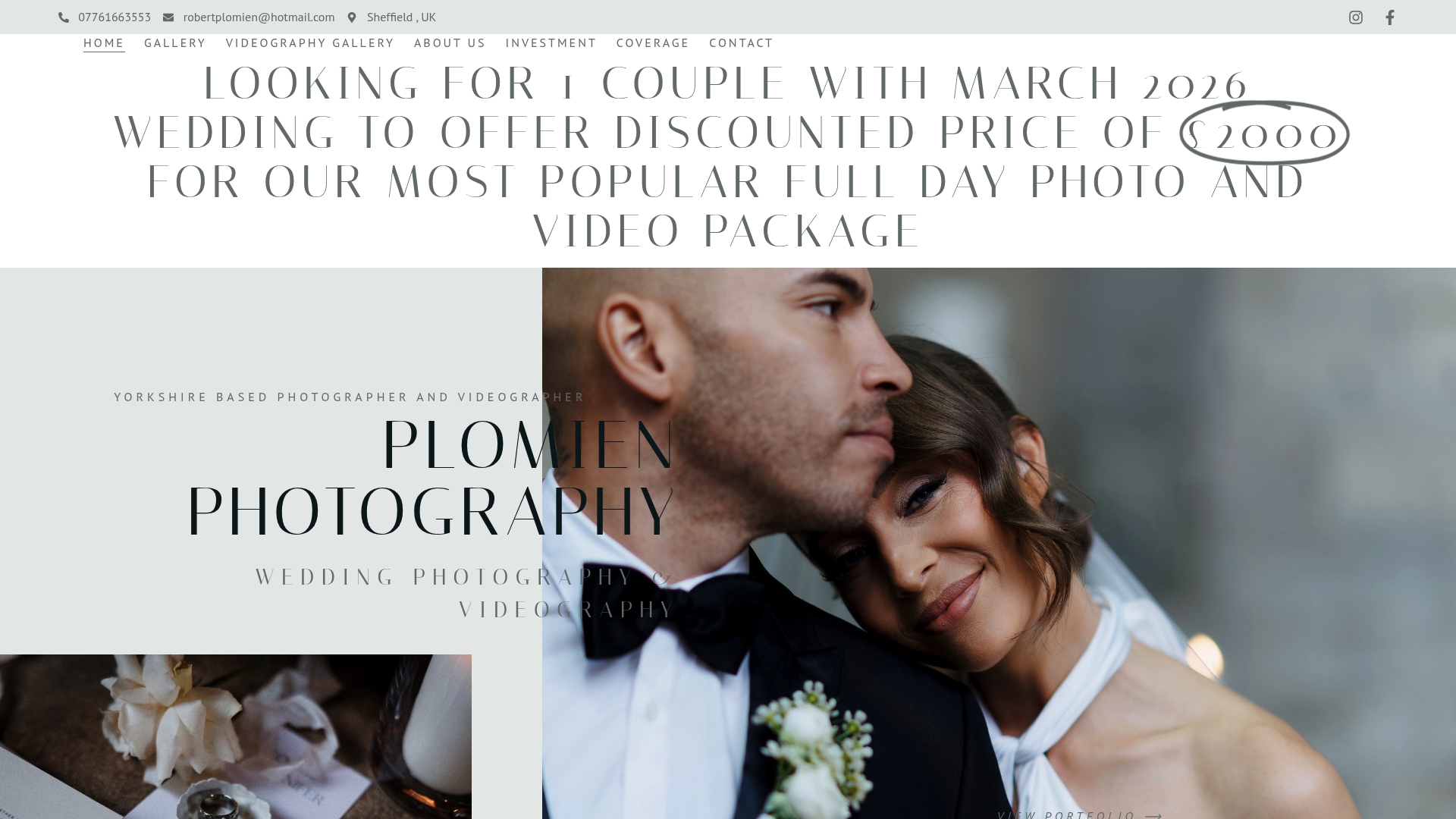
At Plomien Wedding Photography, we specialise in bespoke, emotion-led wedding films across Yorkshire and beyond. We believe every couple has a unique story worth telling with care and authenticity. Whether you are looking to invest in wedding videography for the first time or want to explore our photo and video packages for a seamless, joined-up experience, we are here to guide you every step of the way. Get in touch and let us start telling your story together.
Frequently asked questions
What makes a storytelling wedding film different from a traditional one?
Storytelling films focus on emotion, real moments, and narrative structure, while traditional films document the event in chronological order. As research confirms, storytelling transforms wedding films from documentation into emotional narratives that genuinely preserve the feeling of the day.
How long is a typical storytelling wedding film?
Cinematic storytelling films typically run between 3 and 20 minutes, crafted for maximum emotional impact rather than comprehensive coverage.
Can we have both storytelling and full event coverage?
Yes, many videographers offer hybrid packages that combine a creative storytelling highlights film with full-length event coverage. Hybrid formats are rising in popularity precisely because they give couples emotional depth and completeness in one package.
What’s the risk of choosing a highly stylised storytelling video?
Overly staged or trend-led films can feel less authentic and may not age as well emotionally. As filmmaking experts note, over-staging and trend-chasing dilute genuine narratives, which is why choosing a videographer who leads with your story rather than their style reel is so important.