Drone wedding footage has transformed how couples capture their special day, offering sweeping aerial views that ground-level cameras simply cannot match. Yet many Yorkshire couples remain uncertain about what drone footage truly involves, whether it suits their venue, and how recent UK regulations affect its use. This guide clarifies what drone wedding footage is, explores its cinematic benefits and practical limitations, and provides essential advice on legal requirements, venue restrictions, and planning considerations specific to Yorkshire weddings. You’ll discover how to integrate drone footage seamlessly into your celebration while navigating permissions, weather challenges, and safety protocols.
Table of Contents
- Key takeaways
- What is drone wedding footage?
- The benefits and limitations of drone wedding footage
- Legal requirements and venue restrictions for drones in Yorkshire weddings
- How to plan for drone wedding footage on your special day
- Capture your Yorkshire wedding memories beautifully
- Frequently asked questions
Key Takeaways
| Point | Details |
|---|---|
| Aerial footage planning | Drone wedding footage offers cinematic perspectives but requires careful planning and adherence to regulations to be feasible in Yorkshire venues. |
| Regulations and permissions | Weather, venue permissions, and local regulations significantly influence feasibility and should be checked early in the planning process. |
| Safety and rules | Key safety considerations include selecting appropriate equipment and complying with legal requirements such as the 2026 UK CAA Flyer ID. |
| Complements traditional media | Drone footage complements traditional photography and videography by adding scale and drama without replacing intimate moments. |
What is drone wedding footage?
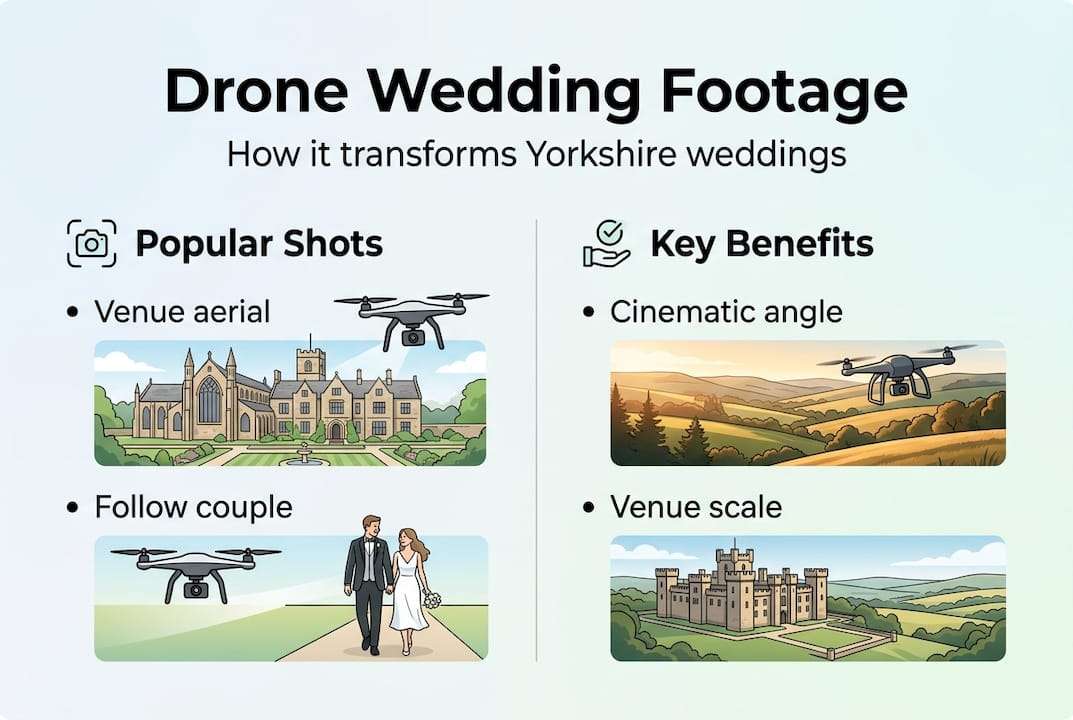
Drone wedding footage refers to aerial video captured by remotely piloted aircraft during your celebration, providing cinematic perspectives that showcase your venue’s landscape and architectural beauty. Unlike traditional wedding videography confined to ground-level angles, drones soar above your ceremony and reception spaces to reveal sweeping vistas of Yorkshire’s countryside, historic estates, and garden settings. This unique approach to wedding documentation has become essential for outdoor celebrations seeking distinctive visual storytelling.
Modern wedding drones typically fall into two categories: lightweight models under 250 grams and heavier professional units. The 2026 CAA regulations have accelerated the shift towards sub-250g drones because they require fewer permissions and pose reduced safety risks in crowded wedding environments. These compact devices deliver surprisingly high-quality 4K video whilst remaining nearly silent during operation, allowing your ceremony to proceed without disruptive buzzing sounds.
Common drone shots include overhead establishing views that reveal your venue’s full scope, dynamic follow shots tracking you and your partner walking through gardens, and dramatic reveal sequences that start close before pulling back to showcase breathtaking landscapes. Skilled operators also capture aerial group portraits, sweeping reception venue exteriors, and golden hour footage that bathes your celebration in warm, cinematic light. These shots work brilliantly when woven into your essential wedding photo collection, adding visual variety and emotional impact.
Pro Tip: Choose a drone operator already familiar with Yorkshire venues to ensure they understand local flight restrictions, optimal shooting locations, and how to navigate unpredictable British weather conditions efficiently.
Drone footage serves as a powerful complement to ground-level photography and videography rather than a replacement. Whilst aerial shots provide spectacular context and scale, they cannot capture intimate moments like exchanged glances, emotional tears, or detailed décor close-ups. The most effective wedding documentation combines both perspectives, creating a complete visual narrative of your day.
The benefits and limitations of drone wedding footage
Drone footage delivers remarkable advantages for couples seeking cinematic wedding documentation. The aerial perspective transforms ordinary venue shots into stunning visual statements, particularly effective for Yorkshire’s historic castles, rolling Dales landscapes, and elegant country estates. These sweeping views create an immediate sense of grandeur and place, allowing future viewers to appreciate the full beauty of your chosen setting. Drone footage also enables creative storytelling techniques impossible with ground cameras, such as tracking shots that follow your journey from ceremony to reception or dramatic reveals that showcase your venue’s relationship to surrounding countryside.
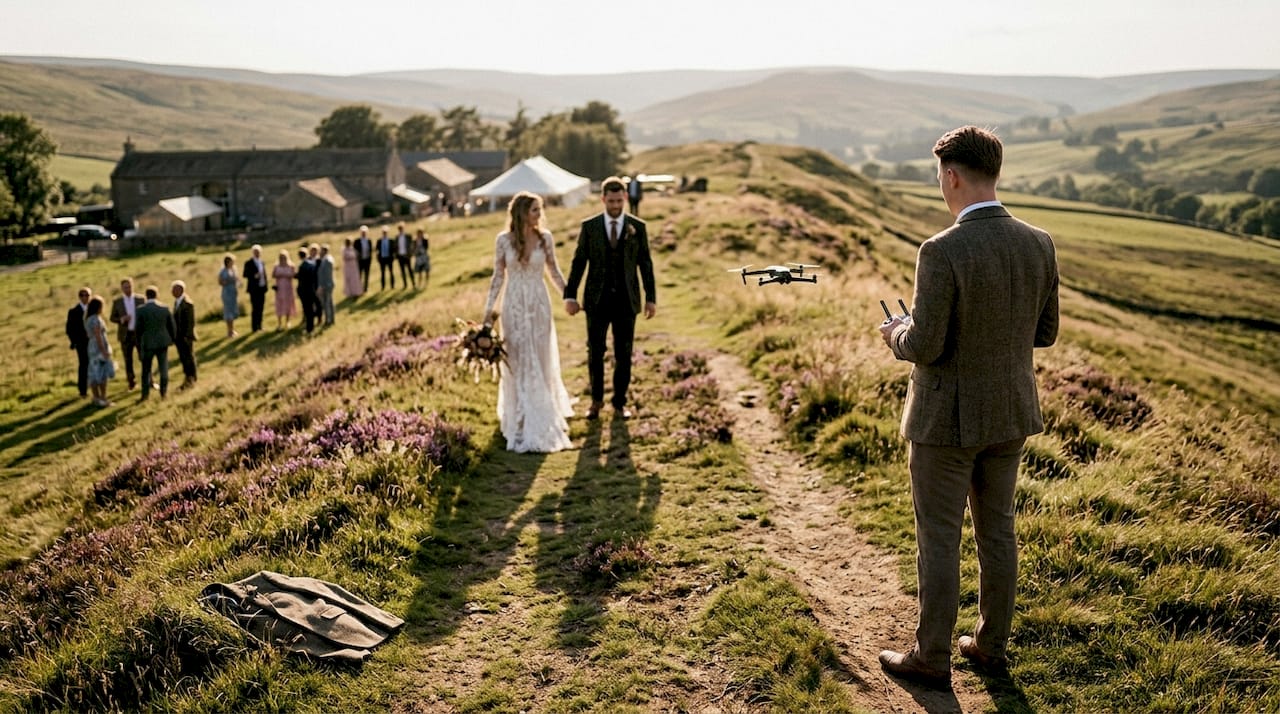
The emotional impact of well-executed drone footage cannot be overstated. Couples consistently report that aerial sequences become their most-watched wedding video segments, shared repeatedly with friends and family who marvel at the cinematic quality. These shots create lasting keepsakes that transport viewers back to your celebration’s atmosphere and setting, preserving memories in ways traditional photography alone cannot achieve.
However, drone wedding documentation carries significant limitations that couples must consider carefully. Weather sensitivity tops the list of challenges, as even moderate wind speeds or light rain can ground drones for safety reasons. Yorkshire’s notoriously unpredictable climate means you should never rely solely on drone footage without backup plans. The additional cost of hiring qualified drone operators and equipment rental adds to your photography budget, typically ranging from £300 to £800 depending on flight duration and operator experience.
Legal restrictions further complicate drone use at weddings. Operators cannot fly near airports, over crowds without specific permissions, or at venues with explicit drone bans. Indoor flights remain prohibited in most circumstances, eliminating drone coverage for church ceremonies or reception halls. Privacy concerns also arise when drones capture footage of neighbouring properties or uninvolved individuals, requiring careful flight path planning.
Drones offer fantastic cinematic potential for outdoor Yorkshire weddings with proper planning, but they’re not suitable for every couple or venue. Weather backup plans and realistic expectations about limitations ensure you’ll be delighted rather than disappointed with the results.
Safety risks emerge when unqualified or inexperienced pilots operate drones near wedding guests. Equipment failures, pilot errors, or unexpected wind gusts can cause crashes that damage property or injure attendees. This underscores the critical importance of hiring only licensed, insured operators with proven wedding experience. The advantages of professional videography extend beyond creative skill to encompass proper safety protocols and risk management.
Legal requirements and venue restrictions for drones in Yorkshire weddings
The UK Civil Aviation Authority implemented significant regulatory updates in 2026 that directly affect wedding drone operations. Most drone pilots now require a CAA Flyer ID, obtained through an online competency test covering safety protocols, airspace restrictions, and operational guidelines. This requirement aims to improve safety standards and reduce incidents involving recreational and commercial drone use. Couples should verify that any drone operator they hire possesses current, valid CAA credentials before booking.
The 2026 regulations also promote sub-250g drones for wedding applications because their lighter weight reduces injury risk and simplifies permission requirements. These compact models can operate in more locations with fewer restrictions compared to heavier professional drones, making them increasingly popular for wedding documentation. However, even lightweight drones must comply with basic safety rules: maintaining visual line of sight, avoiding flights over uninvolved people, and respecting privacy boundaries.
Yorkshire venues vary dramatically in their drone policies, creating a complex landscape for couples to navigate:
| Venue type | Typical drone policy | Permission requirements |
|---|---|---|
| English Heritage sites | Generally prohibited | Written permission rarely granted; strict restrictions apply |
| Private castles and manors | Case-by-case basis | Advance written permission required; insurance proof often requested |
| Yorkshire Dales outdoor locations | Generally permitted | CAA compliance essential; landowner permission needed for private land |
| Hotels and conference venues | Usually allowed with notice | Venue manager approval required; specific flight windows often imposed |
| Churches and religious sites | Typically restricted | Rare permissions; alternatives usually recommended |
Flight restrictions extend beyond venue policies to encompass broader safety zones. Drones cannot operate within certain distances of airports, including Leeds Bradford Airport and smaller regional airfields scattered across Yorkshire. Flights over public roads carrying traffic pose liability concerns and typically require special authorisation. Operating near crowds demands enhanced safety protocols and often specialist insurance coverage that standard operators may not carry.
Pro Tip: Contact your venue’s management at least three months before your wedding date to discuss drone permissions, identify any restrictions, and secure written approval. Early communication prevents last-minute disappointments and allows time to arrange alternatives if drones aren’t permitted.
Indoor drone flights remain largely prohibited due to confined spaces, safety risks, and the challenges of maintaining GPS signal lock. This eliminates drone coverage for traditional church ceremonies, hotel ballrooms, and marquee receptions unless specifically designed drone-friendly spaces exist. Choosing experienced Yorkshire wedding photographers who understand these local restrictions ensures your documentation plans align with legal requirements and venue policies. Researching wedding venues in Yorkshire that explicitly welcome drone footage can streamline your planning process significantly.
How to plan for drone wedding footage on your special day
Successful drone integration requires methodical planning that addresses technical, legal, and creative considerations simultaneously. Follow this structured approach to ensure smooth execution:
- Research and select a licensed drone operator with proven wedding experience, verified CAA credentials, and comprehensive liability insurance covering wedding events specifically.
- Confirm venue permissions in writing at least eight weeks before your wedding date, providing the venue with operator credentials and insurance documentation.
- Schedule drone flights during optimal lighting conditions, typically golden hour periods one hour after sunrise or before sunset when Yorkshire’s landscapes glow beautifully.
- Develop weather contingency plans that identify alternative shooting opportunities or backup dates if conditions prevent safe flight operations.
- Coordinate drone timing with your photographer and videographer to ensure aerial footage complements rather than conflicts with ground-level coverage.
- Brief your wedding party and guests about planned drone operations, establishing clear safety zones and requesting cooperation during filming sequences.
Budget considerations for drone wedding footage extend beyond simple hourly rates. Professional operators typically charge £400 to £800 for comprehensive wedding coverage including pre-ceremony venue shots, ceremony aerials (if permitted), reception exterior footage, and sunset sequences. This investment covers pilot time, equipment costs, insurance, travel, and post-production editing. Some operators offer package deals combining drone footage with traditional videography, potentially reducing overall costs through bundled services.
Coordinating multiple documentation methods requires clear communication and detailed timing schedules. Your drone operator should receive a copy of your wedding timeline highlighting key moments worth capturing from aerial perspectives: guest arrivals, ceremony conclusion, couple portraits, reception entrances, and golden hour sessions. Discuss specific shot preferences, such as whether you want dynamic tracking sequences or static establishing views, and identify any family members or guests who prefer not appearing in drone footage for privacy reasons.
Safety protocols deserve particular attention when planning drone operations at weddings. Essential questions to ask potential drone operators include:
- What CAA certifications and insurance coverage do you currently hold?
- How many weddings have you filmed using drones, and can you provide references?
- What backup equipment do you bring to prevent single-point failures?
- How do you handle unexpected weather changes or technical malfunctions?
- What safety briefings do you provide to wedding parties before flights?
- Do you conduct pre-wedding site surveys to identify hazards and optimal shooting locations?
Pro Tip: If your budget and timeline permit, arrange a drone flight rehearsal at your venue several weeks before the wedding. This allows your operator to scout ideal shooting positions, test lighting conditions, identify potential obstacles, and develop contingency plans for various weather scenarios.
Creative coordination between drone footage and ground-level documentation creates cohesive visual storytelling. Discuss with your photographer how aerial establishing shots can introduce location-based portrait sequences, or how drone footage might transition between ceremony and reception segments in your final wedding video. Briefing your wedding photographer about drone timing ensures they capture complementary angles during the same moments, providing editorial flexibility during post-production. Consider budgeting strategies for Yorkshire wedding photos that allocate appropriate resources across all documentation methods whilst maintaining financial balance.
Capture your Yorkshire wedding memories beautifully
Drone footage creates spectacular aerial perspectives, but it reaches its full potential when paired with comprehensive ground-level photography and videography that capture intimate moments and emotional details. Plomien Wedding Photography specialises in creating cohesive visual narratives that blend cinematic drone sequences with authentic, candid documentation of your Yorkshire celebration.
Our team understands the unique characteristics of Yorkshire venues, from historic estates to countryside settings, ensuring every angle tells your story beautifully. We coordinate seamlessly with drone operators whilst focusing on the personal connections, spontaneous laughter, and heartfelt emotions that make your day uniquely yours. Explore how to invest wisely in wedding photography that preserves these precious memories for generations. Discover the advantages of hiring professional videographers who understand how to integrate drone footage into compelling wedding films. Browse our portfolio featuring stunning Yorkshire wedding venues to envision possibilities for your celebration.
Frequently asked questions
Can you use drone footage at any wedding venue in Yorkshire?
Drone use depends entirely on individual venue policies rather than blanket regional permissions. Historic sites managed by English Heritage typically prohibit drone operations due to safety concerns and heritage protection requirements, whilst private castles and manor houses evaluate requests case by case. Outdoor locations in the Yorkshire Dales generally prove more drone-friendly, though you still need landowner permission for private property and must comply with CAA regulations. Always secure written venue approval before booking drone services. Explore wedding venues in Yorkshire known for welcoming drone documentation.
What are the legal requirements for flying drones at weddings in the UK?
Most drone operators require CAA Flyer ID certification from 2026 onwards, demonstrating competency in safe operation and airspace regulations. Commercial pilots conducting wedding flights need additional permissions and insurance coverage specific to events involving crowds. The regulations recommend sub-250g drones for wedding applications because they face fewer restrictions and pose reduced safety risks compared to heavier models. Operators must maintain visual line of sight, avoid flights over uninvolved people without specific permissions, and respect privacy boundaries throughout operations.
How does weather affect drone wedding footage?
Wind and rain frequently prevent safe drone operations at outdoor weddings, as even moderate conditions can compromise flight stability and equipment safety. Yorkshire’s unpredictable climate means couples should never rely solely on drone footage without backup documentation plans. Professional operators typically refuse flights when wind speeds exceed safe thresholds or when precipitation threatens equipment damage. Schedule drone sessions during stable weather windows, typically early morning or late afternoon, and discuss contingency arrangements with your operator beforehand. Some couples opt for next-day drone shoots if wedding day weather proves unsuitable.
What questions should I ask a drone operator before hiring?
Verify the operator holds current CAA certifications and comprehensive liability insurance covering wedding events specifically, as standard policies may exclude commercial operations. Request references from previous wedding clients and review portfolio footage demonstrating experience with similar venues and lighting conditions. Confirm what backup equipment they bring to prevent single-point failures and how they handle unexpected technical issues or weather changes. Discuss their safety protocols, pre-flight briefing procedures, and whether they conduct advance site surveys. Understanding their post-production timeline and deliverable formats ensures expectations align with your documentation goals. Review tips for hiring wedding photographers in Yorkshire that apply equally to drone operators.