TL;DR:
- Storytelling videography captures emotional moments through a narrative arc, creating a memorable film.
- It emphasizes candid, authentic audio and in-between moments rather than just documenting event chronology.
- This approach offers deeper emotional resonance, lasting legacy, and higher rewatchability for your wedding memories.
Stories are 22 times more memorable than bare facts, yet most couples still end up with a wedding video that feels more like a schedule than a story. You watch it back a few years later and it ticks every box: ceremony, speeches, first dance. But something is missing. That feeling you had standing at the altar, the nervous laughter before the doors opened, your grandmother wiping her eyes during the vows. Storytelling videography exists to capture exactly those moments. This guide explains what it is, how it works, and why it makes such a profound difference to the memories you carry forward.
Table of Contents
- Defining storytelling videography
- Key steps in the storytelling videography process
- Techniques for authentic and emotional wedding films
- The difference storytelling videography makes: for your memories
- A fresh perspective: what most couples miss about storytelling videography
- Bring storytelling videography to your Yorkshire wedding
- Frequently asked questions
Key Takeaways
| Point | Details |
|---|---|
| Storytelling is emotional | Storytelling videography captures the genuine feelings and atmosphere of your wedding day, not just the sequence of events. |
| Preparation ensures authenticity | Personal consultations and unobtrusive filming let your real story unfold naturally, especially in Yorkshire’s diverse venues. |
| Lasting rewatch value | Couples revisit storytelling wedding films more often because stories are 22 times more memorable than mere facts. |
| Adaptable for every venue | Expert videographers can handle challenging spaces like historic or fast-paced Yorkshire sites for seamless storytelling. |
Defining storytelling videography
Let’s start by grounding ourselves in the basics: what exactly does storytelling videography mean, and what makes it so special compared to old-school wedding videos?
Traditional wedding videography follows a simple formula. A camera operator records each event in sequence, from the bridal preparations through to the last dance. The result is a faithful, chronological record. It is perfectly pleasant, but it rarely moves you. Storytelling videography takes a fundamentally different approach. Rather than documenting events, it builds a narrative arc, one with a beginning, emotional turning points, a climax, and a sense of closure. Think of it less like a home video and more like a short film about the two of you.
The distinction matters because emotion is what makes memories stick. When you watch a film that makes you feel something, you remember it. When you watch a list of events, you forget it. Storytelling in wedding photography follows the same principle: the most powerful images are not posed portraits but the glances, the tears, and the small gestures that reveal genuine feeling.
Here is a quick comparison to make the difference concrete:
| Traditional videography | Storytelling videography |
|---|---|
| Chronological structure | Narrative arc with emotional peaks |
| Staged and posed shots | Candid and observational filming |
| Background music only | Layered authentic audio (vows, laughter, ambient sound) |
| Single camera setup | Discreet multi-camera approach |
| Focused on events | Focused on people and emotions |
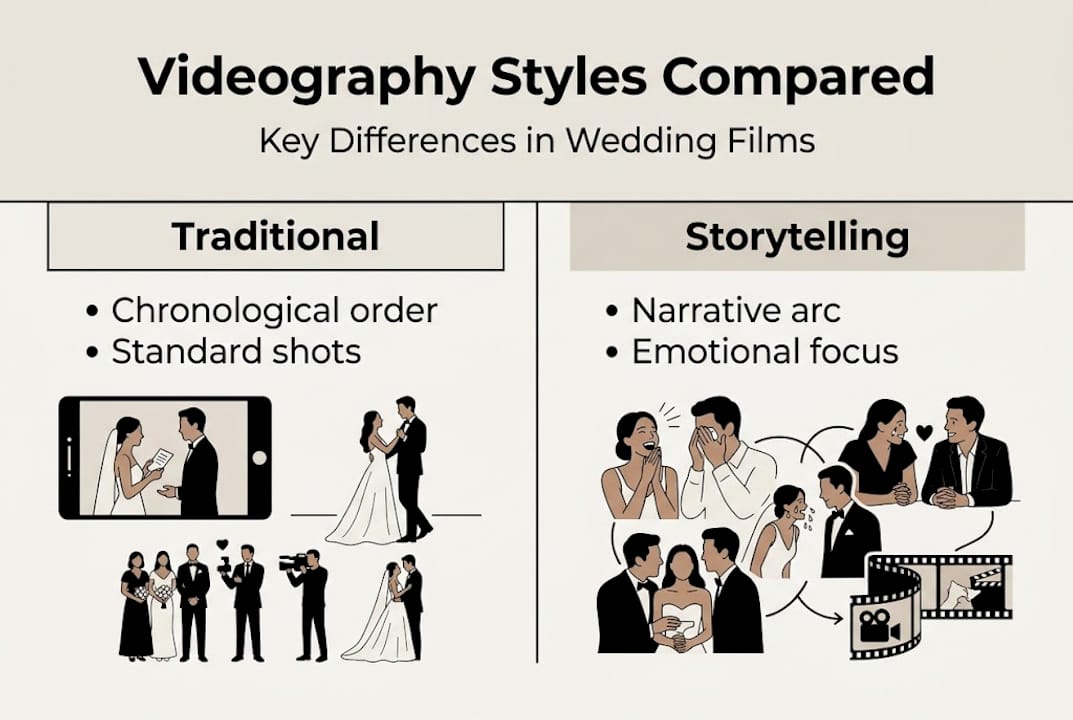
The core mechanics of storytelling videography include an in-depth consultation, unobtrusive multi-camera filming, a strong focus on authentic audio, and an editing process built around emotional arc. Every choice, from lens selection to the order of scenes in the edit, serves the story rather than the schedule.
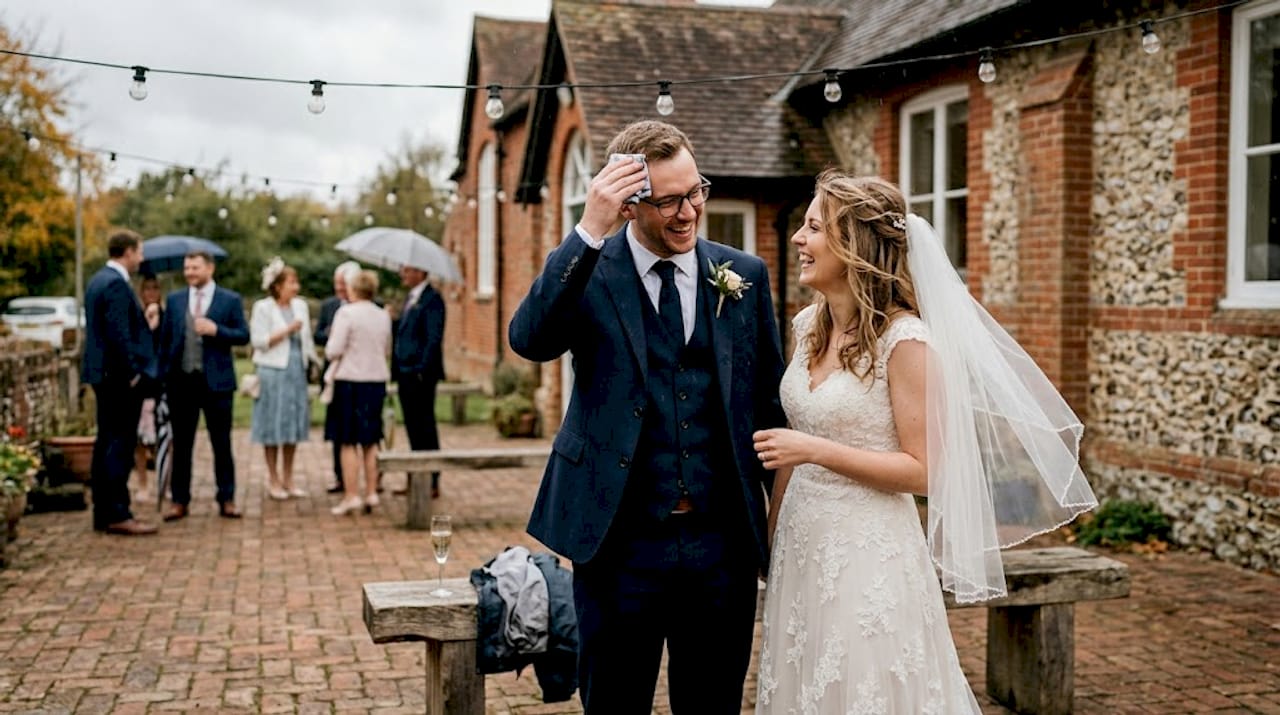
What makes this approach so resonant is the attention paid to in-between moments. These are the seconds that traditional videography misses entirely:
- The quiet breath before the ceremony begins
- A parent’s expression as you walk past
- Whispered words between you and your partner at the altar
- The spontaneous burst of laughter during a speech
- Guests dancing before the official first dance
“The best wedding films are not about the day as it was planned. They are about the day as it was felt.”
Storytelling videography treats your wedding day as a living, breathing story. You are the main characters, and every moment, planned or unplanned, is part of the plot.
Key steps in the storytelling videography process
Understanding what makes storytelling videography unique, let’s take a closer look at the practical steps involved in making your wedding story come to life on film.
The workflow for storytelling wedding films moves through several distinct phases, each one building on the last. Here is how the process typically unfolds:
- Pre-wedding consultation — Your videographer learns about your relationship, your personalities, and the moments that matter most to you. This is not a tick-box exercise. It shapes every creative decision that follows.
- Storyboarding and flexible planning — A loose narrative framework is sketched out, identifying likely emotional peaks such as the first look, the vows, and the speeches. Flexibility is built in because real stories are unpredictable.
- Discreet multi-camera filming — On the day, multiple cameras capture events simultaneously from different angles, ensuring nothing is missed. The team blends into the background so guests behave naturally.
- Authentic audio capture — Lapel microphones, ambient recording, and careful positioning ensure that vows, laughter, and speeches are captured clearly. Audio is the emotional backbone of any storytelling film.
- Emotional editing — The editor assembles the footage using sound, music, and non-linear techniques to build feeling rather than simply replay events in order.
Pro Tip: Ask your videographer during the consultation how they plan to capture audio during the ceremony. Clear, warm audio of your vows is one of the most treasured elements of any wedding film.
Here is a useful reference for typical film lengths:
| Film type | Typical length |
|---|---|
| Highlight reel | 4–15 minutes |
| Full wedding film | 30–90 minutes |
Good coordination for seamless events between your videographer and photographer also plays a significant role. When both teams communicate well, they avoid blocking each other’s shots and ensure every key moment is covered from multiple perspectives. If you are planning a wedding in Yorkshire, professional videography in Yorkshire requires an additional layer of planning given the region’s varied venues, lighting conditions, and fast-moving schedules.
Techniques for authentic and emotional wedding films
Now that you know the steps, let’s look at exactly how storytelling videographers use their artistic and technical skills to ensure your wedding film feels truly authentic and emotional.
The single biggest difference between a memorable film and a forgettable one is observation over choreography. A storytelling videographer does not work from a rigid shot list. They watch. They anticipate. They position themselves where the emotion is about to happen rather than where it already has.
Avoiding checklists and observing in-betweens is a core principle of this approach. Layering real audio over visuals, using symbolism and emotional arcs, and blending into the background are the skills that separate authentic storytelling from polished but hollow coverage.
Key techniques include:
- Anticipatory positioning — Reading body language and moving ahead of emotional moments rather than reacting to them
- Layered audio — Combining vows, ambient sound, and natural laughter to create a rich sonic landscape
- Visual symbolism — Filming meaningful details such as rings, flowers, or a hand being held to punctuate the emotional narrative
- Non-linear editing — Reordering moments in the edit to build emotional crescendo rather than simply replaying the day
Yorkshire’s venues present specific challenges. Historic halls like Bowcliffe Hall and Hawkstone Hall often feature low or mixed lighting, tight corridors, and fast-moving schedules. Pre-planning and minimal kit allow videographers to adapt quickly without disrupting the day. Multi-camera setups are especially valuable here, ensuring coverage even when access is restricted.
Pro Tip: When viewing a videographer’s portfolio, pay attention to how they handle quiet moments. If every scene is action-packed, they may be missing the emotional texture that makes videography tips for authentic memories so valuable.
The goal is a film that feels true to life. Not a performance, not a highlights package, but a genuine record of how your day actually felt. Cinematic wedding videography achieves this by treating every frame as a deliberate creative choice rather than a lucky capture.
The difference storytelling videography makes: for your memories
With the techniques in mind, let’s explore how storytelling videography actually shapes the memories you’ll revisit for years to come.
The science is clear. Stories are 22 times more memorable than isolated facts or events. A wedding film built around narrative rather than chronology is not just more enjoyable to watch. It is genuinely more powerful as a memory object. You will return to it again and again, and each viewing will reconnect you to the feelings of that day rather than simply reminding you of the schedule.
The tangible benefits for Yorkshire couples include:
- Emotional resonance — Films that move you on first viewing and continue to do so years later
- Legacy value — A record that future generations can watch and feel connected to your story
- Rewatchability — Narrative structure gives the film a satisfying arc that rewards repeated viewing
- Authentic detail — Moments your own memory will eventually blur, preserved with clarity and feeling
In terms of investment, UK videography averages £1,600–£2,600, with storytelling-focused services at the higher end of that range. That reflects the additional skill, preparation, and editing time involved. When you consider that this film will be one of the few tangible keepsakes from your wedding day, it is a meaningful investment rather than an extravagance.
“We watched our film on our first anniversary and cried all over again. It was not just the big moments. It was the little things we had completely forgotten. That is what made it priceless.”
The value of preserving your day’s magic is difficult to quantify in the moment. But couples who chose storytelling videography consistently report that it is the wedding decision they are most grateful for. Understanding the advantages of a professional videographer goes beyond technical skill. It is about having someone who genuinely cares about your story.
A fresh perspective: what most couples miss about storytelling videography
Having seen the value, it is time for a candid perspective: here is what most couples and even some videographers miss when it comes to truly meaningful storytelling.
Most couples approach their wedding videography with a list. They want the first kiss captured from this angle, the confetti shot from that position, the speeches in full. This is understandable. But it is also, quietly, the enemy of great storytelling.
The most powerful moments in any wedding film are almost never the ones that were planned. They are the ones that happened because the videographer was watching when nobody else was. The skill that matters most is not technical. It is emotional anticipation, the ability to sense where feeling is about to surface and be ready for it.
Perfection is also overrated. Couples who try to control every frame often end up with a film that looks polished but feels hollow. Authenticity requires a degree of surrender. Let the day unfold. Let your videographer observe. The transformative storytelling in wedding films comes from trusting the process rather than directing it.
Storytelling is ultimately about people, not events. The venue, the flowers, and the table settings are beautiful. But they are not your story. Your story is in the faces, the voices, and the unscripted moments between the two of you.
Bring storytelling videography to your Yorkshire wedding
If today’s insight has sparked new excitement for your own film, here is how you can take action to ensure your Yorkshire wedding memories are truly cherished.
At Plomien Wedding Photography, we believe every couple deserves a wedding film that genuinely moves them. We specialise in authentic, candid storytelling across Yorkshire’s most beautiful venues, from intimate countryside barns to grand historic halls.
Whether you are just beginning to explore your options or are ready to book, we would love to talk. Understanding the value of wedding videography is the first step. From there, our guide to selecting your videographer will help you ask the right questions. When you are ready to move forward, explore why hire a professional to understand exactly what experience and skill bring to your day.
Frequently asked questions
How does storytelling wedding videography differ from traditional styles?
Storytelling videography focuses on capturing emotions, real audio, and non-linear narratives rather than just events in chronological order. The distinct storytelling mechanics include consultation, emotional arc editing, and candid filming that traditional approaches simply do not prioritise.
Is storytelling videography suitable for Yorkshire weddings in historic or challenging venues?
Yes, with pre-planning and discreet techniques, storytelling videographers adapt to low light and fast pace typical of Yorkshire’s diverse venues. Edge cases require pre-planning and minimal kit to ensure authentic capture without disrupting the atmosphere.
What does a typical storytelling wedding film include?
Your film features candid moments, key events with authentic audio, and a narrative arc structured for emotional impact. The storytelling approach includes layered sound, in-between moments, and emotional editing that brings the whole day to life.
How long are wedding films that use storytelling techniques?
Highlight reels usually last 4–15 minutes, with full films running 30–90 minutes, depending on your coverage and preferences. Film lengths vary based on the scope of coverage you choose and how much of the day you want preserved in full.
Is storytelling videography more expensive than traditional videography?
UK storytelling videography averages £1,600–£2,600, reflecting its personalisation and skill, but remains broadly comparable to quality traditional services. The additional investment reflects the consultation time, multi-camera setup, and the more involved editing process.