Many couples believe their wedding day timeline is simply a schedule to keep things moving, but the truth is far more significant. Your timeline directly determines the quality, variety, and emotional depth of your wedding photographs. Understanding how each segment of your day affects photographic outcomes empowers you to create a schedule that delivers stunning, authentic memories whilst reducing stress for everyone involved.
Table of Contents
- Understanding The Impact Of Wedding Day Timelines On Photography
- Key Timeline Components That Influence Photographic Coverage
- How To Align Your Wedding Timeline With Your Photographer’s Process
- Common Timeline Pitfalls And How They Affect Your Wedding Photos
- Considering Expert Wedding Photography In Yorkshire?
- Frequently Asked Questions
Key takeaways
| Point | Details |
|---|---|
| Strategic scheduling captures essential moments | Thoughtful timeline planning ensures your photographer has adequate time for ceremony, portraits, and candid reception shots without rushing. |
| Buffer times reduce stress and delays | Building 15-20 minute buffers between events accommodates unexpected delays and keeps photography on track. |
| Alignment with photographer’s workflow improves quality | Collaborating early with your photographer ensures the timeline suits their style and maximises photo opportunities. |
| Realistic session durations prevent rushed photos | Allocating proper time for couple portraits and group shots produces relaxed, natural images rather than hurried poses. |
| Vendor coordination benefits overall flow | Synchronising your photographer’s needs with caterers, venue staff, and other suppliers creates seamless transitions. |
Understanding the impact of wedding day timelines on photography
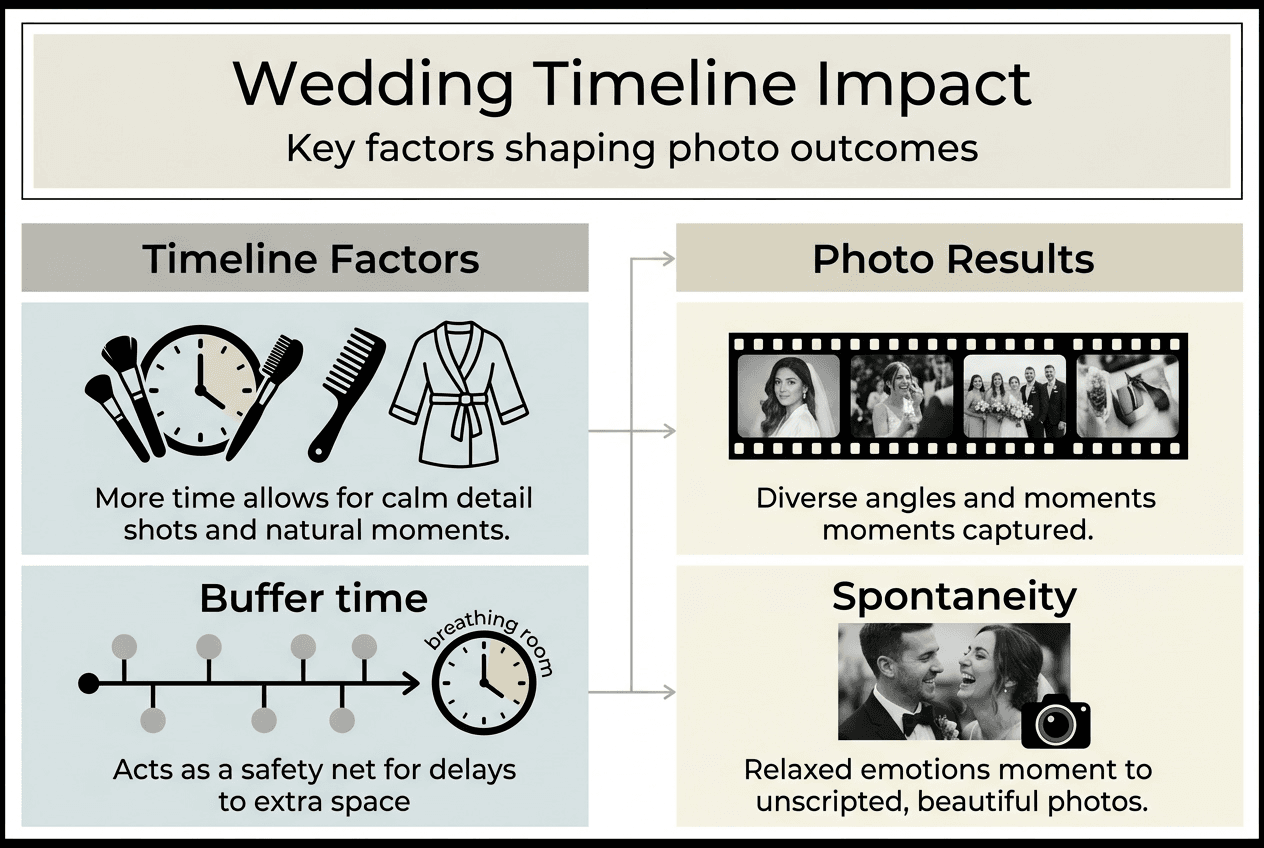
Your wedding timeline shapes every photograph taken on your special day. When you allocate sufficient time for each event, your photographer can capture diverse angles, candid moments, and creative compositions that tell your unique story. Rushed schedules force photographers to prioritise efficiency over artistry, often missing spontaneous interactions and emotional details that make wedding albums truly memorable.
Consider how timing affects different photographic opportunities throughout your day. Morning preparations benefit from relaxed pacing that allows your photographer to document intimate moments like your mum fastening your dress or your best man adjusting his tie. These genuine interactions disappear when everyone rushes to meet tight deadlines. Similarly, ceremony coverage requires your photographer to position themselves strategically before proceedings begin, which becomes impossible if the schedule runs late.
Proper timeline adjustments ensure comprehensive photography coverage without cutting corners. Strategic scheduling creates space for meaningful couple portraits in beautiful locations, whether that’s the gardens at Hedsor House or the grounds of Bowcliffe Hall. Your photographer needs time to scout ideal lighting, compose shots thoughtfully, and help you feel comfortable in front of the camera rather than anxiously watching the clock.
Incorporating buffer time proves vital when navigating unexpected delays. Traffic, wardrobe adjustments, or emotional moments all consume minutes that weren’t originally planned. These buffers prevent a domino effect where one delay compromises every subsequent photo opportunity.
Your timeline should also reflect your photographer’s style and workflow. Documentary photographers thrive when given freedom to move between spaces and capture unfolding moments, whilst traditional portrait photographers need dedicated, uninterrupted sessions. Discussing these preferences early ensures your schedule supports rather than hinders their creative process.
Pro Tip: Share your draft timeline with your photographer at least two months before your wedding, allowing time for adjustments that optimise photographic opportunities without disrupting other vendor commitments.
Key timeline components that influence photographic coverage
Each segment of your wedding day presents distinct photographic opportunities and challenges. Understanding how preparation timing, ceremony logistics, portrait sessions, and reception flow affect your photos helps you allocate time strategically.
Preparation timing significantly impacts the quality and variety of morning shots. Starting photography coverage two hours before the ceremony allows your photographer to capture detail shots of your dress, rings, and flowers in beautiful natural light, plus candid moments as you and your wedding party get ready. Compressed preparation schedules force photographers to rush through these intimate moments or skip them entirely.
Ceremony length and location logistics determine available shooting moments. Outdoor ceremonies at venues like Hawkstone Hall require photographers to account for changing light conditions and weather contingencies. Indoor ceremonies in churches or registry offices often have restrictions on photographer movement and flash usage. Your timeline should include arrival time for your photographer to assess lighting, identify optimal positions, and coordinate with the officiant about any photography limitations.
| Timeline component | Recommended duration | Photographic impact |
|---|---|---|
| Bridal preparations | 90-120 minutes | Captures details, candid moments, emotional interactions |
| Ceremony | 30-45 minutes | Documents vows, reactions, processional moments |
| Couple portraits | 30-45 minutes | Creates varied, relaxed images in ideal locations |
| Group photos | 30-40 minutes | Ensures all family combinations without guest frustration |
| Reception coverage | 3-4 hours | Records speeches, first dance, guest interactions |
Portrait sessions require realistic time allocation for best results. Thirty to forty-five minutes allows you to visit multiple locations, try different poses, and genuinely relax into natural expressions. Ten-minute portrait slots produce stiff, rushed images that lack the romantic, authentic quality most couples desire. Full-day coverage captures the richness of all wedding moments, ensuring no highlights are lost to poor scheduling.
Reception timing determines opportunities for spontaneous, joyful photos. Spacing speeches, cake cutting, and first dance appropriately gives your photographer time to reposition, adjust lighting, and capture guest reactions alongside the main events. Compressed reception schedules where everything happens within an hour create chaos that reduces photo quality and variety.
Late changes to your schedule can dramatically reduce photographic variety. When the ceremony starts thirty minutes late, that time gets subtracted from portrait sessions or reception coverage unless you’ve built adequate buffers. This often means fewer couple photos or missing the golden hour light that creates stunning outdoor portraits.
How to align your wedding timeline with your photographer’s process
Successful timeline planning requires active collaboration between you and your photographer. This partnership ensures your schedule accommodates their creative process whilst meeting your vision for the day’s flow and priorities.
Discuss your timeline early with your photographer to accommodate their style. Documentary photographers may request freedom to move between preparation locations, whilst portrait specialists might need dedicated time blocks. Share your vision for the day’s feel, whether that’s relaxed and organic or structured and traditional, so your photographer can suggest timing that supports this atmosphere. Starting these conversations during your initial consultations, ideally six to nine months before your wedding, provides ample opportunity for refinements.
Plan realistic allowances for travel, breaks, and unexpected holds. If your ceremony and reception occur at different venues, calculate actual driving time plus fifteen minutes for parking and equipment setup. Yorkshire traffic, particularly around popular wedding venues on summer Saturdays, can add unexpected delays. Your photographer also needs brief breaks during long coverage days to change memory cards, check equipment, and maintain the energy required for excellent work.
Integrate vendor coordination to ease photographer access and workflow:
- Share your photographer’s timeline requirements with your venue coordinator so they can facilitate smooth transitions between spaces.
- Coordinate with your caterer regarding meal service timing, ensuring your photographer can capture food presentation before guests are seated.
- Align with your florist about when centrepieces and arrangements will be complete for detail photography.
- Inform your band or DJ about key moments requiring photographic coverage so they can announce events with adequate notice.
- Brief your wedding planner about photography priorities so they can help manage timing on the day.
Couples who coordinate timelines with their photographers experience fewer delays and better photo outcomes. This collaboration creates a shared understanding of priorities and contingencies that benefits everyone involved.
Prioritise key moments with your photographer to ensure focus on what matters most to you. Perhaps you want extensive coverage of your ceremony but minimal reception formalities, or vice versa. Maybe capturing your grandparents’ reactions holds special significance. Communicating these priorities helps your photographer allocate their time and creative energy strategically, ensuring the moments you treasure most receive appropriate attention.
Share your final timeline with all involved parties at least two weeks before your wedding to prevent confusion. This includes your wedding party, immediate family, vendors, and venue staff. Everyone understanding the schedule reduces the likelihood of delays caused by people not knowing when or where they need to be.
Pro Tip: Create a simplified timeline for your wedding party and a detailed version for vendors, highlighting where and when your photographer needs access to specific spaces or people for optimal coverage.
Common timeline pitfalls and how they affect your wedding photos
Even well-intentioned couples make scheduling mistakes that compromise their wedding photography. Recognising these common errors helps you avoid them and achieve the photographic results you envision.
Insufficient buffer time causes hurried and missed photos. When your ceremony starts late because your florist arrived behind schedule, that lost time comes from somewhere, usually your portrait session. Without buffers, you’re forced to choose between cutting portraits short or delaying your reception, both of which create stress and reduce photo quality. Building fifteen to twenty minute buffers between major timeline segments absorbs these delays without cascading effects.
Overlapping vendor schedules can block photo opportunities. If your caterer begins setting up the reception space during your planned detail photography time, your photographer loses access to that beautifully decorated room. Similarly, if your hair stylist runs late into the time allocated for getting-ready photos, your photographer misses candid preparation moments. Coordinating vendor arrival and service times with your photography schedule prevents these conflicts.
Ignoring natural light timings limits photography quality. Yorkshire’s winter weddings feature sunset around 4pm, whilst summer celebrations enjoy light until 9pm. Scheduling your couple portraits for 6pm in January means shooting in darkness or relying entirely on artificial light, which rarely produces the romantic, glowing images most couples want. Your photographer can advise on optimal timing for outdoor portraits based on your wedding date and venue location.
Delays and overcompressed schedules are leading causes of poor wedding photo quality. When everything runs late, photographers must work faster, take fewer shots, and skip creative opportunities to keep pace with the schedule.
Last minute changes disrupt photographer workflow and preparation. Deciding on your wedding morning to add ten more people to group photos or relocate your portrait session requires your photographer to completely revise their planned approach. Whilst professionals can adapt, these changes often mean less time for the creative, artistic shots that make your album special.
| Common pitfall | Photographic consequence | Solution |
|---|---|---|
| No buffer time | Rushed shots, missed moments | Add 15-20 minute buffers between events |
| Overlapping vendors | Blocked access to spaces | Coordinate all vendor timelines |
| Ignoring light conditions | Poor quality outdoor photos | Schedule portraits during optimal light |
| Compressed portrait time | Stiff, limited variety | Allocate minimum 30-45 minutes |
| Late timeline changes | Reduced creative opportunities | Finalise schedule two weeks ahead |
Failing to communicate timeline changes to your photographer causes confusion and missed coverage. If you decide to move your cake cutting from 8pm to 7pm but don’t inform your photographer, they might be photographing guest interactions in another room when this important moment occurs. Keeping your photographer updated about any schedule adjustments, even minor ones, ensures they’re positioned correctly for every key event.
Considering expert wedding photography in Yorkshire?
Planning your wedding timeline feels overwhelming, but you don’t have to navigate these decisions alone. Working with experienced wedding photographers who understand Yorkshire venues and seasonal light conditions transforms timeline planning from stressful guesswork into confident preparation.
At Plomien Wedding Photography, we help couples create schedules that balance their vision with photographic excellence. Our experience across prestigious Yorkshire venues means we can advise on realistic timing for your specific location, whether you’re celebrating at Bowcliffe Hall’s elegant spaces or Hedsor House’s stunning grounds. We understand how different venues and seasons affect light, logistics, and photo opportunities.

Our tailored photography packages for Yorkshire weddings include comprehensive timeline consultation, ensuring your schedule supports rather than hinders beautiful photography. We’ll review your draft timeline, suggest optimisations based on your priorities, and coordinate with your other vendors to create seamless flow throughout your day. This collaborative approach means you can relax knowing every moment will be captured beautifully.
Explore our resources on why invest in wedding photography to understand the lasting value of professional coverage, review our wedding day photo timeline guide for detailed planning advice, and discover how to choose wedding photography packages that match your needs and budget.
Frequently asked questions
How long should we allocate for couple portraits to get quality photos?
Generally, thirty to forty-five minutes allows relaxed, varied couple photos in multiple locations with different poses and lighting. This duration gives you time to move between spots, adjust to being photographed, and genuinely enjoy the experience rather than feeling rushed. Shorter sessions typically produce fewer creative options and more stiff, hurried expressions.
What’s the best way to coordinate our timeline with the photographer’s schedule?
Engage your photographer early in your planning process, ideally six to nine months before your wedding. Share your draft timeline and update them regularly as details are confirmed. Schedule a dedicated timeline planning session about two months before your wedding to finalise all details, discuss contingencies, and ensure everyone understands the schedule.
How can unexpected delays impact our wedding photos?
Delays reduce photo variety and increase rushed sessions, often forcing photographers to skip creative shots or cut portrait time short. When your ceremony starts twenty minutes late, that time typically comes from your couple portraits or reception coverage unless you’ve built buffer time into your schedule. These rushed sessions produce fewer images and less relaxed, natural expressions.
Is full day photography coverage worth the investment?
Full day coverage captures every moment from morning preparations through evening celebrations, avoiding missed memories that shorter packages might overlook. This comprehensive approach documents the complete story of your wedding, including spontaneous moments and emotional details that occur throughout the day. Many couples find these unexpected candid shots become their most treasured images, making full coverage a worthwhile investment in lasting memories.
Recommended
- Master wedding day timeline planning for stress-free 2026 weddings
- Wedding Day Photo Timeline Guide for Stress-Free Photos – Plomien Wedding Photography
- 7 Essential Best Wedding Photography Practices for Couples – Plomien Wedding Photography
- Why Invest in Wedding Photography: Lasting Impact – Plomien Wedding Photography