Many couples believe the magic of wedding photography ends the moment the camera clicks. In reality, the most transformative work happens long after you’ve left the venue. Post-production is where raw files become genuine, emotional stories you’ll cherish for decades. For Yorkshire couples investing in full-day coverage, understanding this process helps you choose the right photographer, set realistic expectations, and truly appreciate what goes into every image and frame you receive.
Table of Contents
- Why post-production matters for your wedding memories
- The post-production workflow: From camera to keepsake
- Yorkshire editing styles: Timeless, true-to-life, and on-trend
- Post-production pitfalls: What can go wrong (and how to avoid it)
- Wedding videography: How post-production brings your story to life
- The truth: Why post-production is worth the wait
- Ready to secure emotional, enduring wedding imagery?
- Frequently asked questions
Key Takeaways
| Point | Details |
|---|---|
| Transforms raw files | Post-production turns unedited images and clips into emotional, story-driven memories couples will treasure. |
| Style matters | Requesting a timeless, true-to-life Yorkshire style ensures wedding images look natural and enduring. |
| Patience pays off | Waiting a few weeks for careful editing secures higher quality and more satisfying results than rushed work. |
| Communication prevents issues | Clear discussions with your photographer about style and delivery avoid disappointment and ensure expectations are met. |
Why post-production matters for your wedding memories
Post-production is the entire process of refining your raw wedding files after the shoot. It covers everything from selecting the strongest images to adjusting light, correcting colour, removing distractions, and arranging your photos and footage into a flowing story. Without it, even the most beautifully captured moments can feel flat or disconnected.
A common myth is that editing is simply about airbrushing or adding heavy filters. It’s far more nuanced than that. As post-processing expectations show, skilled editing is about honouring what was genuinely there on the day, not manufacturing something artificial. The goal is always authenticity.
“Post-production refines raw wedding images and videos into cohesive, emotional narratives by correcting exposure, colour balance, retouching distractions, and sequencing for storytelling.”
Here’s what post-production actually addresses:
- Exposure and brightness: Balancing dark ceremony interiors with bright outdoor receptions
- Colour grading: Ensuring skin tones look natural and consistent across hundreds of images
- Distraction removal: Tidying stray wires, unwanted objects, or temporary blemishes
- Sequencing: Arranging images so they tell your story from morning preparations to the final dance
- Emotional pacing: Choosing which moments to include so the narrative breathes and moves
Understanding how editing shapes your story helps you see why two photographers shooting the same wedding can deliver completely different results. The craft of storytelling in wedding photography lives as much in the edit suite as it does on the day itself. For Yorkshire couples, where venues range from grand country estates to intimate barn conversions, this careful post-production work is what makes your images feel genuinely yours.
The post-production workflow: From camera to keepsake
Understanding the power of post-production, couples next want to know exactly what their imagery goes through. The journey from raw files to finished gallery involves several distinct stages, each requiring real skill and time.
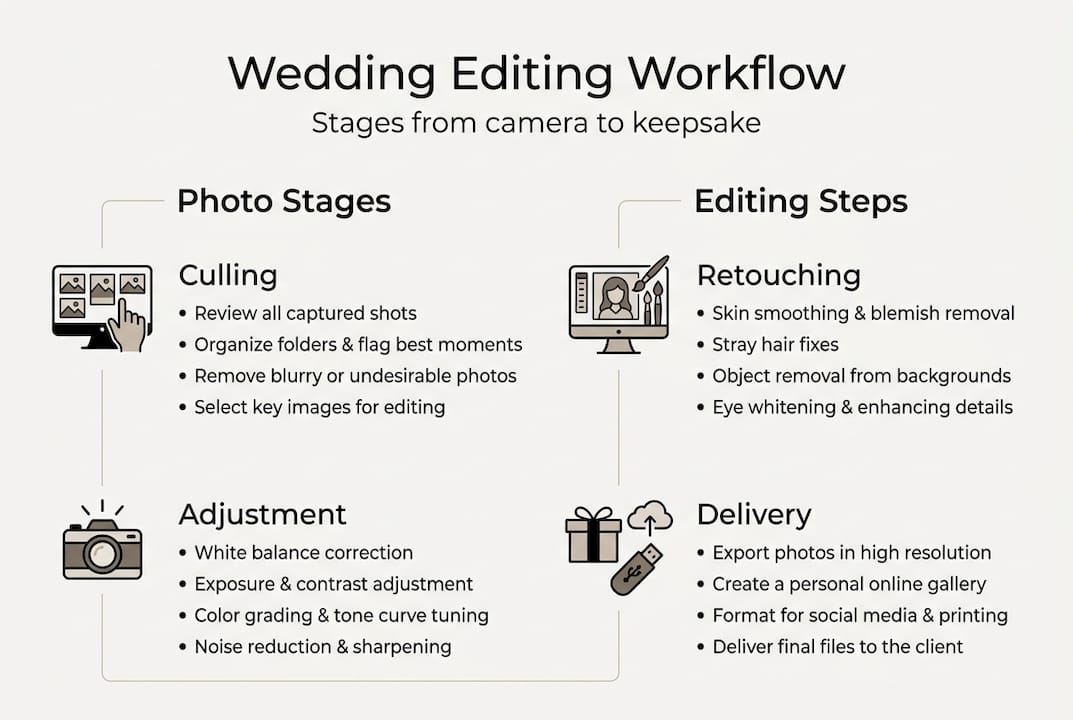
Here’s a typical step-by-step breakdown:
- Culling: Reviewing every single frame and selecting only the strongest images. For a full wedding day, this can mean sifting through 2,000 to 4,000 shots.
- Basic adjustments: Correcting exposure, white balance, and contrast across all selected images.
- Retouching and grading: Detailed work on individual images, including colour grading and removing distractions.
- Sequencing: Arranging images and footage into a coherent, emotionally resonant order.
- Export and delivery: Preparing final files in the correct formats for your gallery or film.
As what happens to your wedding photos explains, culling alone can take 8 to 12 hours, with basic adjustments adding another 6 to 10 hours on top. Retouching and grading vary depending on the complexity of the day.
| Stage | Typical time required |
|---|---|
| Culling | 8 to 12 hours |
| Basic adjustments | 6 to 10 hours |
| Retouching and grading | Variable |
| Sequencing and export | 2 to 4 hours |
Sneak peeks are often shared within a few days, giving you a first glimpse of the magic. Full galleries typically follow in three to four weeks. Understanding the candid wedding photography process helps you appreciate why this careful, considered approach takes the time it does.
Pro Tip: Ask your photographer directly how many images you’ll receive, what their typical turnaround is, and whether retouching is included in your package. Getting these details confirmed in writing avoids surprises later.
Yorkshire editing styles: Timeless, true-to-life, and on-trend
Knowing the technical process, couples often wonder how local style sensibilities shape their images. Yorkshire has a wonderfully diverse wedding scene, and the editing style your photographer uses should feel as fitting as the venue itself.
The most popular editing approaches you’ll encounter include:
- Natural and true-to-life: Colours that reflect exactly what you saw on the day, with warm, honest skin tones
- Timeless: Subtle, classic edits that won’t look dated in ten or twenty years
- Cinematic: Richer contrast and moodier tones, often used in barn or countryside settings
- Editorial: Cleaner, brighter edits with a fashion-forward feel, popular at contemporary venues
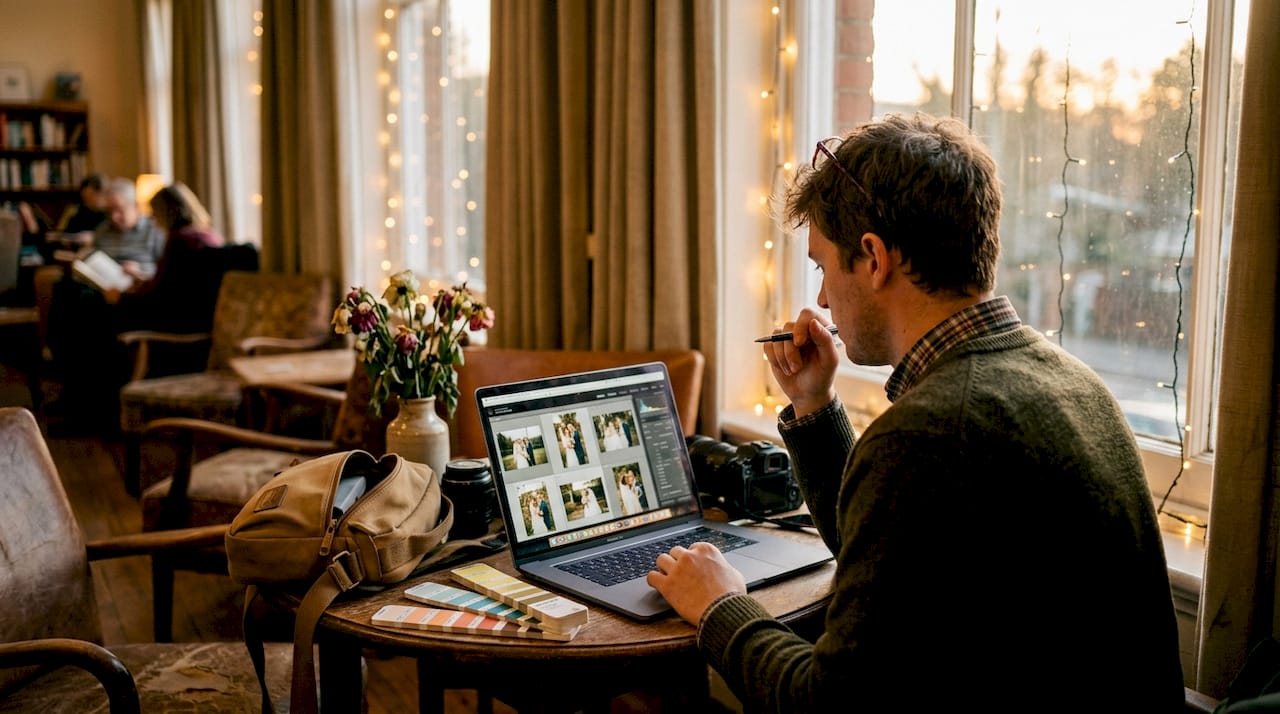
Yorkshire’s venue lighting presents unique editing challenges. Fairy lights at venues like Wharfedale Grange create a warm amber glow that needs careful balancing. Stone-walled barns often produce deep shadows that require skilled exposure work. Yorkshire photographers emphasise natural, true-to-life colours and timeless edits that complement venue lighting, with photo delivery typically running three to four weeks.
| Editing style | Best suited to | Typical feel |
|---|---|---|
| Natural | All venues | Warm, honest, authentic |
| Timeless | Country houses, churches | Classic, enduring |
| Cinematic | Barns, outdoor settings | Moody, dramatic |
| Editorial | Contemporary venues | Clean, bright, bold |
Exploring editorial wedding style can help you identify which approach resonates with you. Reviewing portfolios carefully and discussing best wedding photography practices with your photographer ensures your final images genuinely reflect your day.
Post-production pitfalls: What can go wrong (and how to avoid it)
Great editing takes time and taste, so how do you make sure your results match your vision? The most common post-production problems are entirely avoidable with clear communication before your wedding day.
Here are the most frequent issues couples encounter:
- Mismatched expectations: Loving a photographer’s portfolio but not discussing whether that style applies to your specific venue or lighting conditions.
- Rushed edits: Choosing a photographer who promises an unusually fast turnaround, often at the expense of quality and care.
- Poor communication: Not confirming delivery timelines, image counts, or included retouching before signing a contract.
- Style drift: Receiving images that look noticeably different from the portfolio samples you fell in love with.
- Unclear revision policies: Not knowing whether you can request adjustments if something doesn’t feel right.
As photo delivery timetables and personal communication confirm, setting clear expectations upfront is the single most effective way to ensure satisfaction. Reviewing how to approach choosing photography packages and understanding your wedding day photo timeline both help you ask smarter questions.
For further guidance on what to expect from post-processing, reviewing independent resources alongside your photographer’s portfolio gives you a well-rounded picture.
Pro Tip: Always ask to see a full gallery from a previous wedding, not just highlight images. This shows you the consistency and quality of editing across an entire day.
Wedding videography: How post-production brings your story to life
With photos covered, it’s just as crucial to understand how post-production brings wedding films to life. Video editing is a distinct craft, and the post-production process for films is significantly more involved than for photography.
A well-edited Yorkshire wedding film typically includes:
- Music selection: Choosing tracks that match the emotional tone of your day and complement key moments
- Pacing and rhythm: Cutting footage so the film breathes naturally, neither rushing nor dragging
- Narrative arc: Structuring the film from anticipation through ceremony to celebration, building genuine emotion
- Colour grading: Applying a consistent visual tone that matches your photography and suits the venue
- Audio mixing: Balancing vows, speeches, ambient sound, and music so every word is heard clearly
“Sequencing and grading in post-production create an emotional narrative in films, not just in still images.”
Film post-production takes considerably longer than photo editing. Where full photo galleries arrive in three to four weeks, wedding films typically take six to eight weeks. This reflects the sheer volume of footage captured and the precision required in every cut. Exploring videography tips and understanding the role of videography at weddings helps you appreciate why this investment in time produces something so genuinely moving. A great wedding film isn’t just a record of your day. It’s a piece of storytelling you’ll return to again and again.
The truth: Why post-production is worth the wait
Here’s something we feel strongly about, and it’s worth saying plainly: the couples who push hardest for the fastest delivery are often the ones who later wish they’d been more patient.
We’ve seen what happens when editing is rushed. Images lack consistency. Films feel choppy. The emotional thread that should run through your entire gallery simply isn’t there. Speed and artistry rarely live together comfortably.
What you’ll actually remember ten years from now isn’t how quickly your gallery arrived. You’ll remember the image of your partner’s face as you walked down the aisle, captured perfectly and edited with care so every detail sings. You’ll remember the film that made your parents cry at Christmas. Those results come from time and intention, not from a 48-hour turnaround.
Investing in a photographer who takes post-production seriously is one of the most genuinely valuable decisions you can make. As we explore in our guide to the lasting impact of photography, the images that endure are always the ones that were crafted with patience and passion. A three to six week wait for something you’ll cherish for a lifetime is, honestly, no wait at all.
Ready to secure emotional, enduring wedding imagery?
If reading this has made you realise just how much care goes into your wedding images and films, you’re already thinking like a couple who’ll love their gallery for years to come. Choosing a photographer and videographer who genuinely prioritise post-production makes all the difference.
We’d love to show you what thoughtful, detailed post-production looks like in practice. Explore the lasting impact of photography and discover the wedding videography magic we bring to every project. You can also browse our coordinated photo and video packages to find the right fit for your Yorkshire wedding. We’re here to help you create memories that genuinely last.
Frequently asked questions
How long does wedding photo and video post-production really take?
Sneak peeks arrive within a few days, full photo galleries in three to four weeks, and wedding films typically in six to eight weeks, reflecting the detailed work involved in each.
What is actually done to wedding images in post-production?
Photos are selected, adjusted for exposure and colour, retouched to remove distractions, and sequenced to tell a compelling story, as post-production refines raw files into cohesive emotional narratives.
Should I ask for a particular editing style with my Yorkshire photographer?
Absolutely. Discussing your preferences ensures your photographer can match their editing to your vision and venue lighting, since Yorkshire photographers emphasise natural, true-to-life colours and timeless edits.
Is wedding video editing different from photo editing?
Yes, film editing adds music, pacing, and a narrative arc that make wedding films emotionally distinct, as sequencing and grading in post-production create a unique emotional journey through moving image.
Recommended
- Editing in wedding photography: how it shapes your story
- Why Invest in Wedding Photography: Lasting Impact – Plomien Wedding Photography
- Editorial Wedding Photography: Capturing Authenticity – Plomien Wedding Photography
- How wedding day timelines influence photography results
- Professional photography – Guestly Homes
- Documentation & Photography: Professional Equipment & Tools